For any Indian student, choosing a country for flight training is a significant decision. It has direct implications for costs, timelines, licence conversions and airline employment opportunities. Popularity alone does not make a destination the right fit. The best country for pilot training in 2026 depends on a student’s budget, career plan and ability to meet Indian regulatory requirements.
Those applying to Indian airlines must ultimately answer to the Directorate General of Civil Aviation. Under DGCA CPL requirements in India, a Commercial Pilot Licence candidate must be at least 18 years of age, have completed 10+2 or equivalent with Physics and Mathematics, and satisfy medical, examination, training and flying stage requirements.
Why Indian Students Consider Training Abroad
Many Indian students are drawn to training abroad for stable weather, uncongested airspace and consistent flying windows. Foreign programmes can also offer exposure to different airspace environments and international radio procedures.
However, a foreign CPL does not automatically convert to an Indian licence. Students who want to fly commercially in India must go through the DGCA licence conversion process and meet all Indian licensing requirements. This is a specialised procedure managed entirely by DGCA, and students should research it thoroughly before committing to an overseas academy. The best country for pilot training in 2026 should never be chosen solely on the basis of an advertisement promising fast completion or reduced hourly rates.
For students interested in the conversion pathway specifically, understanding what the best pilot licence conversion academy in India involves is a useful step before making any overseas enrolment decision.
India: The Direct Option Most Aligned With DGCA
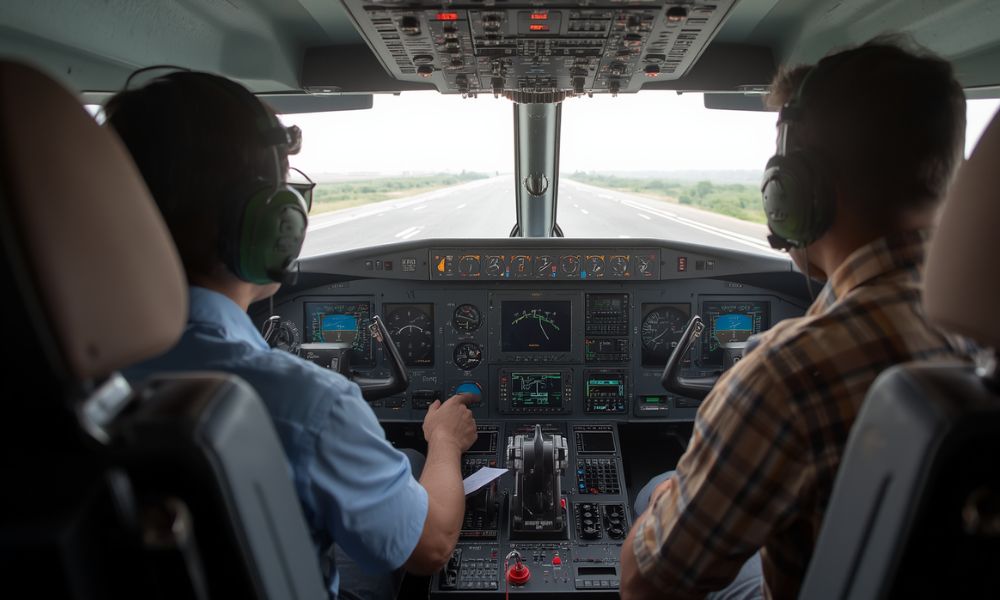
India is the most straightforward option for many candidates. Training within the domestic system means students become familiar with Indian weather, airspace and radio procedures from the outset. It also eliminates costs associated with foreign visas, accommodation and currency exposure.
The single largest benefit is regulatory alignment. Training in India produces an Indian licence directly, removing the need to complete a foreign qualification and then navigate a conversion process afterwards.
Training quality and pace vary between academies. Students should investigate aircraft availability, monthly flying hours logged by current students and recent completion records. India can be the right choice when the selected academy offers reliable pricing, consistent scheduling and a strong safety culture.
South Africa: Value With Good Weather
South Africa attracts Indian students seeking lower flying costs and favourable weather. Quieter airspace can make it easier to practise circuits and cross-country navigation during early training stages.
School selection requires care. Verify that the academy is properly approved, check its maintenance arrangements, accommodation standards and support with documentation for Indian licence conversion.
A low headline price is misleading when it excludes examination charges, fuel surcharges, equipment costs, additional hours or conversion expenses. South Africa can represent good value — but only if the full cost is calculated honestly, not just the opening quote.
United States: Broad Aviation Infrastructure
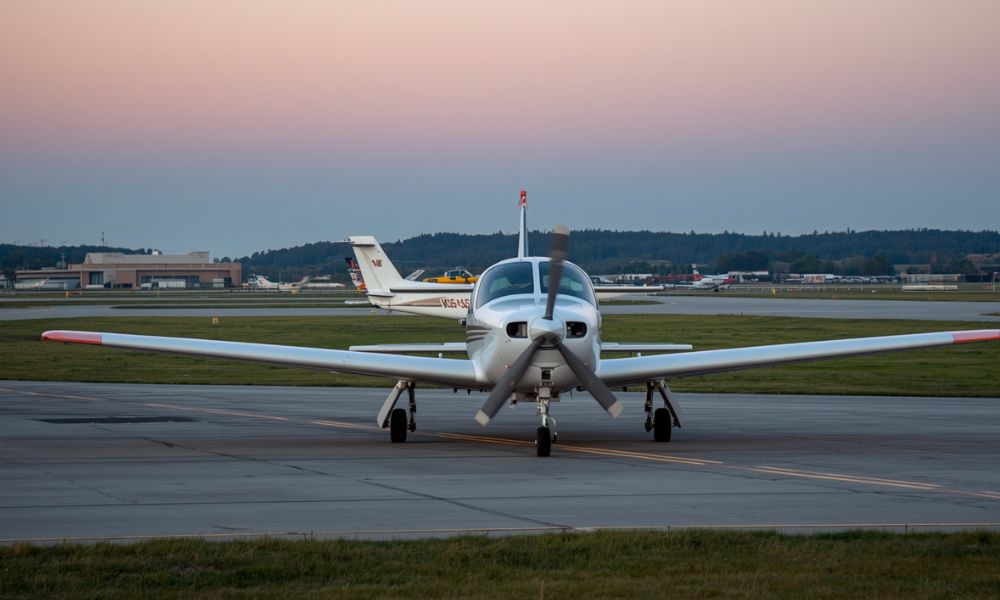
The US offers an extensive general-aviation network and varied training environments. Students gain exposure to controlled airspace, regional airports and professional radio communication standards.
A well-managed school with a reliable fleet can support efficient progress. However, the full budget must account for visa compliance, travel, accommodation, insurance and FAA-to-DGCA licence conversion. Currency fluctuations can also alter the final cost unpredictably.
Students who prioritise wide operational exposure and can manage a less predictable financial commitment may find the United States a strong option.
Canada, Australia and New Zealand
Canada offers structured flight training with the added dimension of winter flying, which can strengthen decision-making and weather management skills, though it may slow overall progress in some regions.
Australia has well-regarded aviation training organisations, large training airspace and strong airline industry standards. For many Indian families, the cost of tuition and living expenses remains a significant drawback.
New Zealand offers coastal scenery, variable weather and challenging terrain that can sharpen situational awareness. As with any destination, costs and timelines must be compared carefully against what the training environment actually delivers.
The best country for pilot training in 2026 is the one that remains financially viable across the full span of training, licence conversion and pre-employment preparation, not just the first few months.
Compare the Complete Cost
The headline price of any academy rarely tells the full story. A realistic budget must include aircraft hire, instructor fees, simulator hours, examinations, medicals, books, headset, uniform, accommodation, food, transport, visa fees, insurance and any additional flying hours required. A detailed breakdown of pilot course fees and what they typically cover in India can help students benchmark what a genuine all-in cost should look like before comparing overseas options.
Request a written fee breakdown from any school under consideration and confirm whether prices are fixed or fuel-linked. Check the payment schedule, refund policy and the fee applicable if a flight test needs to be retaken.
A school that interrupts training or requires multiple revision flights can become far more expensive than its initial price suggested. A modestly priced school with reliable aircraft and stable instructors may cost less overall than a cheaper-looking alternative with operational inconsistencies.
Medical and Academic Preparation
Candidates should confirm all academic and medical requirements are complete before paying any significant training fee.
- Confirm eligibility, specifically 10+2 with Physics and Mathematics
- Complete a DGCA Class 2 Medical Examination before the start of flight training
- Obtain DGCA Class 1 medical clearance at the Commercial Pilot Licence stage
- Use only DGCA-approved medical examiners and follow the correct documentation process
- Resolve any medical, academic or documentation issues before departing for overseas training
- Keep medical certificates, academic records and identification documents current and organised
- Confirm eligibility for overseas training and the requirements for converting a foreign licence in India
Addressing these steps early avoids delays, additional costs and licensing complications. Even the best training country cannot compensate for missing eligibility, incomplete documents or inadequate preparation.
Choosing the Right Flight School
Comparing countries is only part of the decision — the quality of the individual school usually matters more than the destination. Rather than relying on testimonials, speak directly to current students. Ask how many aircraft are actively flying, how frequently students are completing flying hours and how long recent CPL candidates took to finish their training.
Be cautious of schools that promise guaranteed airline employment, obscure fees within broad tuition descriptions or request large upfront payments with vague refund terms. A credible academy should be as forthright about its limitations as it is about its strengths.
Comparing DGCA-approved flying institutes in India is a useful reference point for understanding what a transparent, well-structured training organisation should offer — whether you ultimately train domestically or abroad.
VFTI also guides Indian aspirants in comparing training paths, understanding DGCA-oriented planning and evaluating the cost implications of training in India versus overseas.
Final Verdict
India offers direct DGCA regulatory alignment and is the most straightforward choice for the majority of Indian students. South Africa offers competitive pricing and favourable weather. The United States provides broad aviation exposure. Canada, Australia and New Zealand each offer disciplined training environments with their own logistical and financial considerations.
There is no single country that suits every student. The right choice is one that provides recognised instruction, safe flying conditions, reliable aircraft, qualified instructors, honest pricing and a clear pathway to an Indian licence.
Students should verify requirements, calculate total costs and speak to alumni before enrolling anywhere. The right country, and the right school gives an aspiring aviator the foundation to build skill, confidence and sound professional judgement without creating avoidable financial or licensing difficulties along the way.
Leave a Reply