Author: pgvisav@gmail.com

  • Flight School Prerequisites Explained: Step-by-Step Admission Guide

    Flight School Prerequisites Explained: Step-by-Step Admission Guide

    There is a long process for becoming a pilot in India that happens before one is ever soloed. They must know academic eligibility, medical textability galore examination textation and paperwork as well as the reality of good choosing a proper preparation academy. Indian students benefit from a step-by-step system with Admission as the shortest path: Step-By-Step Outlined Admission Process Beginning Research leading to Flight School Prerequisites

    Students targeting a Commercial Pilot Licence need to understand what are the DGCA requirements before enrolling, as India’s civil aviation system is controlled by the Directorate General of Civil Aviation (DGCA).

    A Beginner Guide To Flight School Requirements in India

    Flight School Prerequisites Explained: A Step-By-Step Guide To Getting In – Part 1 – Basic Eligibility As per DGCA (Director General of Civil Aviation) rules, it is mandatory for people applying for Commercial Pilot Licence in India, to have cleared Class 10+2 or an equivalent examination with Physics and Mathematics from a recognised board/university. Directorate General of Civil Aviation (DGCA) Pariksha guidelines clearly state that candidates other than the PPL category shall have to study Physics and Mathematics.

    Students who have passed Class 12 without Physics or Mathematics will be required to provide an accepted equivalent qualification before being able to proceed with CPL eligibility. Verify with the DGCA before any major fee payment for training.

    Minimum Age Requirements

    Depending on the category of licence, you may have to be a certain age. The applicant for a Student Pilot’s Licence shall be not less than 16 years of age and DGCA said the applicant for a Private Pilot Licence must be over 17.

    Thus, the age pact is something students must check beforehand rather than take flying courses to be similar entry-wise.

    Academic Preparation for Pilot Training
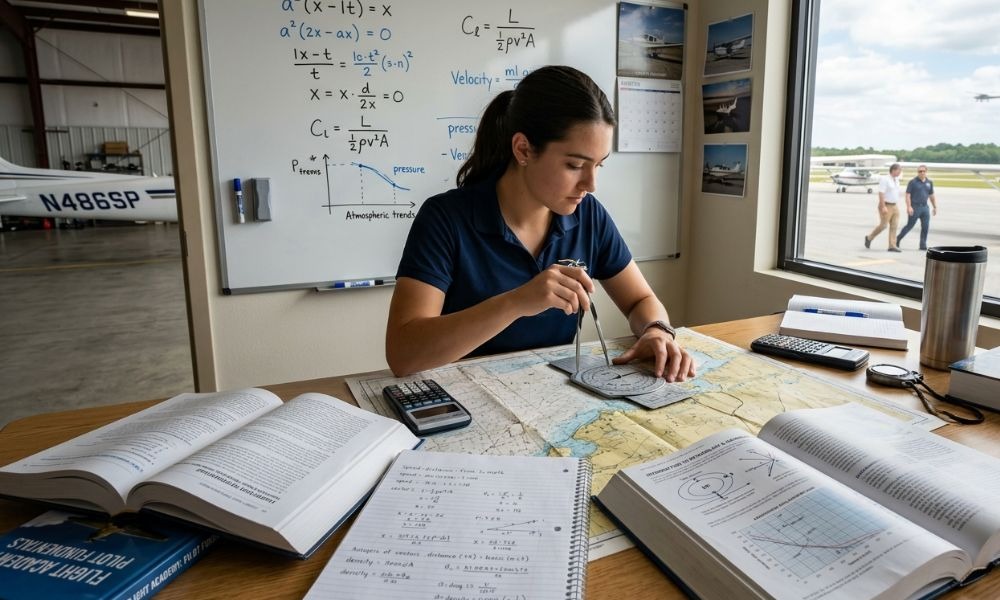
    An understanding of the foundations of algebra, elementary mechanics, simple speed-distance-time calculations and basic atmospheric concepts can come in handy when you take a closer look at navigation (Chapter 4), meteorology (Chapter 6), aircraft performance and principles of flight (Chapters 15-19).

    Physics and Mathematics are NOT academic formalities. They reinforce much of the math and principles found in ground school and flight planning. A solid foundation can significantly de-mystify technical subjects.

    English and Communication Skills

    Aviation relies on precise communication. Comfort with technical material, directions, aviation terminology and instruction in English should be second nature for students.

    It is also essential to develop good listening skills. Given that radio communications need to happen swiftly and protocols can be very rigid, students are taught to get used to succinct and precise communication as early on as possible.

    Don’t Spend Big Until You Get Medically Fit

    The Flight School Prerequisites Explained: A Step-By-Step Guide to Admission should always keep medical eligibility toward the top of the list.

    DGCA has aviation medical requirements and systems of Class 1 & Class 2 Medical Examination. Medical examination may evaluate vision, hearing, cardiovascular health general fitness and other aeromedical factors.

    Early medical process: ensure to undergo the right medical procedures before joining to prevent surprises post enrolment which can run into costs.

    Step-by-Step Flight School Admission Process in India
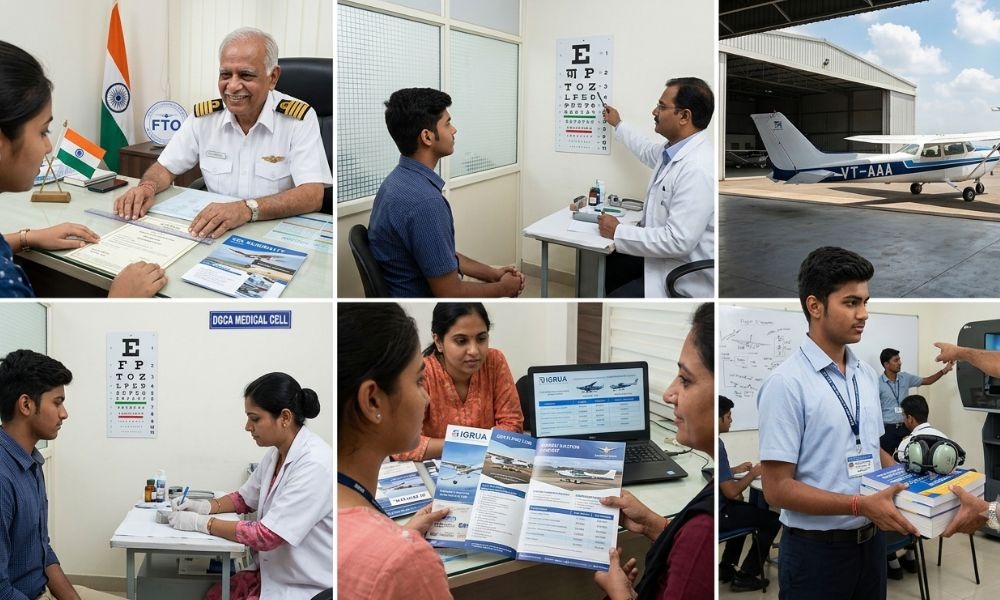
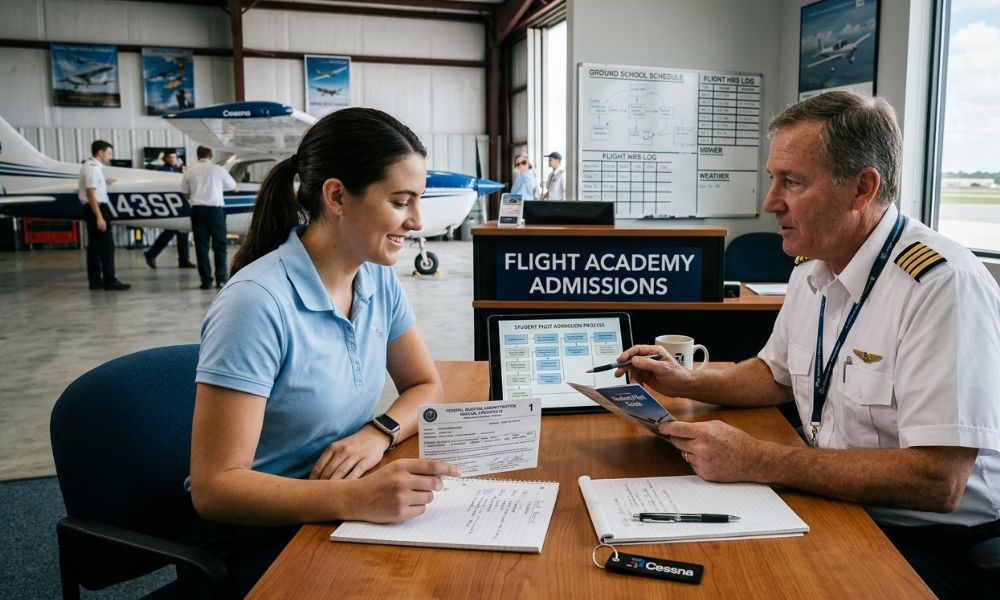
    The Flight School Prerequisites Explained: Step-by-Step Admission Guide becomes easier when the journey is divided into manageable stages:

    • Check your age and educational eligibility.
    • Confirm that your Class 12 subjects satisfy the required route.
    • Begin the appropriate DGCA medical process.
    • Research suitable Flight Training Organisations.
    • Compare aircraft availability, instructors, location, accommodation, and fees.
    • Prepare academic and identity documents.
    • Complete the flight school’s application or selection procedure.
    • Register for applicable DGCA examination processes.
    • Begin ground school and practical flight training.

    Following these steps in sequence can prevent unnecessary delays and financial complications.

    DGCA Examination and Computer Number

    Overview of India’s Aviation Examination SystemFlight School Prerequisites Explained: The Step-by-Step Admission Guide.replace below with image Flight School Prerequisites Explained: The Step-by-StepAdmission Guide

    The DGCA also has Pariksha portal where Flight-crew examinations registration and processes related to the examination could be done. Instead of depending exclusively on a private or flight academy ad, Applications must be strictly based on current DGCA circular in terms of documentation and eligibility.

    Ground school usually includes Air Navigation, Aviation Meteorology, Air Regulations and technical knowledge. Retain consistency in study and conceptual clarity because it helps a lot while learning cockpit training later on.

    Choosing a Flight School

    Do not pick an academy just because it is in Delhi, Mumbai, Bengaluru, Hyderabad Chennai, Kolkata or near your home. Check the no of serviceable an aircraft, No of active instructors, how frequently they fly, Maintenance & Other arrangements and Institutions for Training

    A school that has team members up for regular flying might be more attractive than on with a good headline price.

    Weather and Airport Environment

    Local conditions influence training continuity. Weather closures, poor visibility, and airport traffic are just a few of them—along with maintenance delays or limited aircraft availability—that can slow hour-building down.

    This is why students should research how often current trainees fly rather than simply evaluating a school on its published syllabus completion time.

    Training Cost and Financial Planning

    Pilot training is a major expense. What do you realistically want to spend?Flight School Prerequisites Explained: Step-by-Step Admission Guide

    Request facts in writing covering aviation flying costs, professor fees, simulators, tests? Accommodation? Medicals? licence associated personal savings and the price of additional flying hours.

    Creating Flight time for a Transport Pilot Licence
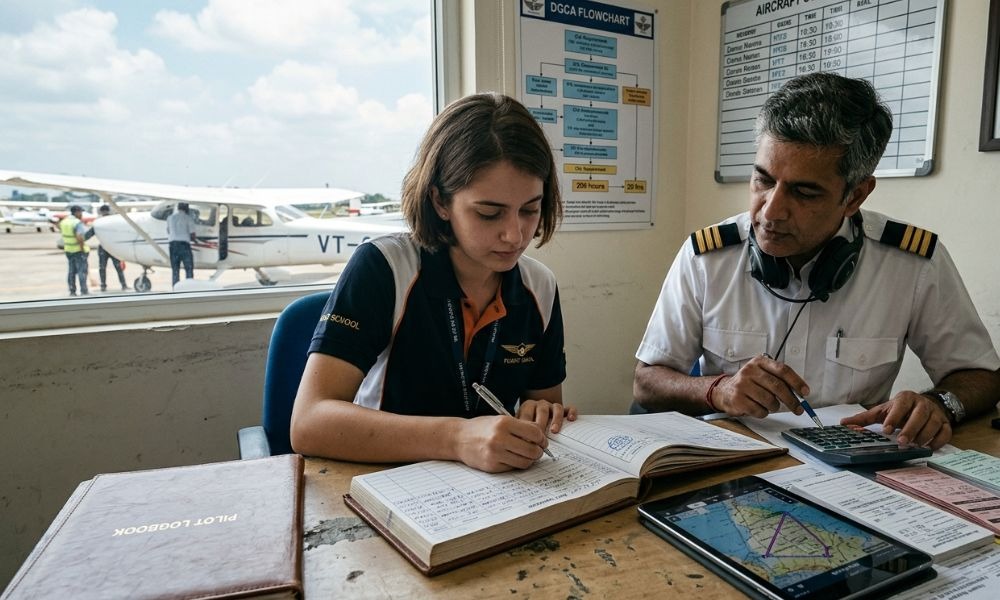
    The Civil Aviation Requirements (CPL) are defined by the Directorate General of Civil Aviation (DGCA), which mentions maximum flight experience requirements in order to acquire a CPL, specifying that one has to have 200 hours of total flight time apart from detailed experience.

    You would have completed all of the data up until October 2023, so they should make sure their programme was based around the current licensing requirements and keep a detailed record of their flying records.

    Thus, the Flight School Prerequisites Explained: The Intro and Roadmap for Those Who Need It is at once an admission guide along with planning framework. Simply offering the lowest advertised price certainly is not the cheapest means of training; aircraft shortages, weather disruption or irregular scheduling can hamper training time.

    Documents Students Should Prepare

    Documentation may differ based on the academy and regulatory process, but students must arrange their Class 10 and Class 12 certificates, mark sheets, valid identity-documents, photographs and relevant medical records.

    For applicable flight-crew components, DGCA Pariksha direction identifies Class 10+2 mark sheets and passing certificates as academic credentials.

    Store scanned and physical copies of documents directly for clarity and to avoid these clerical delays. Consistency across education and identification documents when it comes to names and dates of birth is also imperative.

    Common Mistakes to Avoid

    A common mistake is to pay a big deposit before confirmation of medical and academic eligibility. One is making a decision based on the quoted cost of an academic program alone.

    Avoid Overlookassuning, admission to a flight academy would automatically lead to obtaining a CPL and later job availability as an airline pilot.

    Admission Guide for Prospective Flight School Applicants advises applicants to confirm the standing of the training organisation, learn about refund policies and training continuity, as well as talk with other students whenever possible.

    Selecting a Local Flight Training Alternative in India

    Location can be a significant factor in cost and convenience for Indian students. Staying close to home has proven to decrease accommodation resources needed, but with operations relying on efficiency, the need for proximity is less important.

    Weather, airspace, and runway availability; fleet size and readiness; instructor availability; aircraft maintenance support; average flying activity.

    Flight School Prerequisites: A Step-by-Step Guide to Gaining AdmissionOne of the ultimate goals should be a school that comes through with consistently structured and systematic flight training instead of nothing but a nice brochure.

    Final Thoughts

    Pilot training in India The introduction of all candidates who wish to become a pilot is based on eligibility criteria, discipline & self-organization and a few medical fitness tests that require academic preparation along with examinations, care for simplifications from time-travel capacity and employment. It may seem complicated at first, but each specification is much more manageable when addressed independently.

    When trying to understand all the prerequisites essential for admission into a flight school, Flight School Prerequisites Explained: Step-by-Step Admission Guide gives you one of the most lucid pointers to get started: check your education first, then follow the relevant medical steps, look for suitable training organizations in advance, know your DGCA examination requirements properly and finally finance everything heavily before committing yourself to a flight-school program.

    Also, verify if there are any changes in requirements through official DGCA, eGCA and Pariksha resources as aviation procedures and regulatory requirements change over time before paying huge amounts of money.
  • Accelerated Flight School vs Traditional Training: Which Is Better?

    Accelerated Flight School vs Traditional Training: Which Is Better?

    This training option is one of the most important decisions that an aspiring aviator will ever have to make. The training path you choose might affect your money, time, learning speed to gain confidence, and how quickly you transition into a career as an aviation professional.

    The big question for many of the new students is a simple one: Accelerated Flight School vs Standard Training: Which is best?

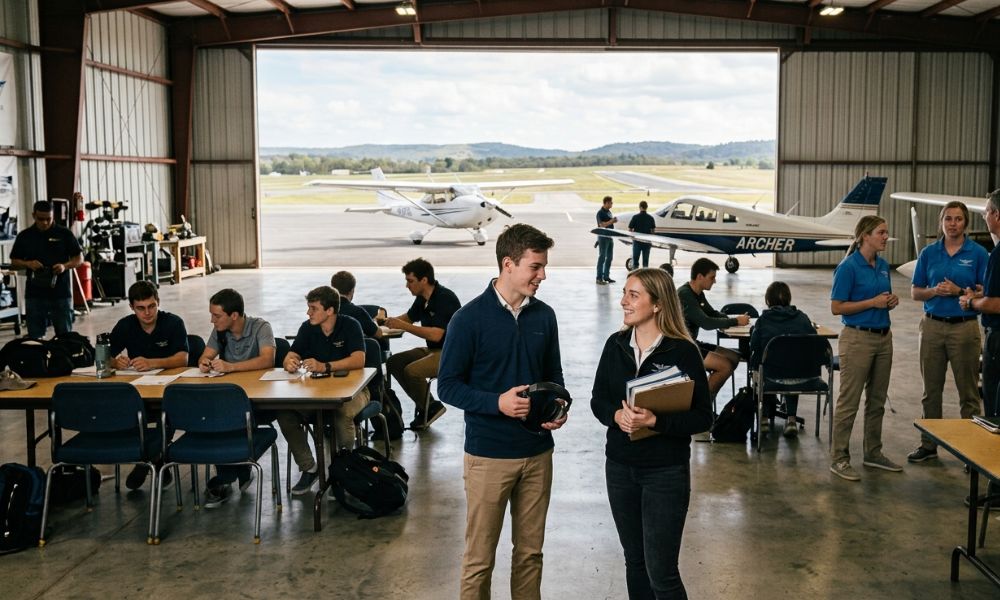
    Each approach can arrive at the same result but is a completely different experience. Accelerated training condenses flight instruction, ground study and practical preparation into an abbreviated time period. The normal training is spread more than a couple of weeks or months, so students can work around the workplace, school, family unit, and other obligations.

    The right local flight school for students rarely depends solely on speed alone. Things such as aircraft availability, the instructor quality, weather effect on the airport traffic, personal learning habits and financial flexibility can all impact, much like how it compares to other training routes, such as flight school vs. air force pilot training.

    Understanding Accelerated Flight Training

    Accelerated flight school is built around intensive learning. Rather than flying once or twice weekly, students may train four or more days a week with multiple training activities taking place in a single day.

    This immersive approach creates continuity. Equality is not just for races or classes of people, it’s even on the playing field too. Less time doing the maneuvers they have allowed to get rusty during long breaks, autofails frequently help students retrain quickly but usually in small spurts.

    Accelerated Flight School vs Practical Training, Which is Best?, this consistency is one of the more convincing arguments for speeding up training.

    An accelerated schedule could encompass a morning full of ground instruction, an in-air flight lesson that afternoon, a timeshare use of the sim, and individual study work later that evening. The rhythm can be demanding. Well, for that kind of student, that intensity may yield improvement at a rapid pace.

    Aviation Careers Especially Attracted to Accelerated Training: If you are looking to advance through private pilot, instrument, commercial or instructor training, you might be better off in a more regimented environment where aviation is your sole focus each day.

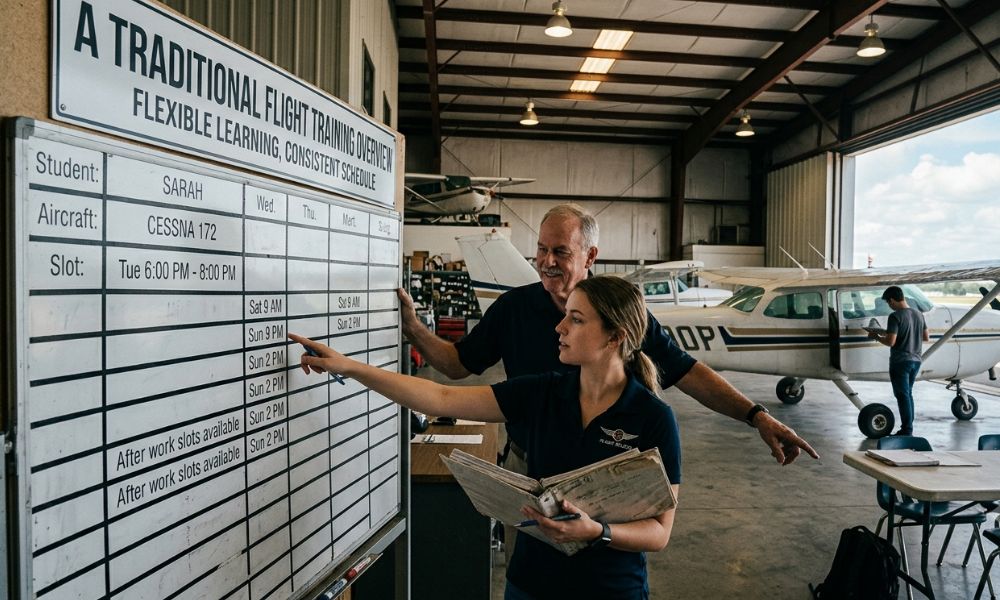
    A Traditional Flight Training Overview

    Entry is much more agile than traditional flight training. Lessons are typically organized around the availability of the student, and at the same time on how many people have signed up for a slot at your flight school.

    This student could be doing two flights a week after work, training every weekend, or booking additional lessons in blocks of free time. This renders traditional training feasible for those who are unable to temporarily reorganize their lives around aviation.

    The slower pace is not the same as lower quality instruction. In fact, some students learn more when they have longer time intervals because they can engage in concept review and procedure study as well as mental practice of difficult maneuvers.

    On the contrary, bigger break between flights could also lead to inefficiency. Where there are several weeks between lessons, getting back to where the child was can take up part of the next session rather than helping them progress.

    This is why having a consistent schedule is crucial in Accelerated Flight School vs Traditional Training: Which Is Better? comparison.

    Training Speed and Completion Time

    The main visible difference between both systems is speed.

    Accelerated programs are specifically designed to minimize the calendar time needed to finish training. The students here train very often, keep their momentum and pass the syllabus stages one after another in a brief span of time.

    Traditional students, schedule permitting may have more flexibility in completion but it will be much harder to predict when they are likely to finish. Weather cancellations, instructor availability (or scarcity), work and family commitments along with the usual aircraft working issues can lag your training out for quite a time.

    None of those approaches promise an end date. Local conditions matter.

    An active flight school at a busy airport may lead to longer taxi times or traffic congestion in scheduling. Alternatively, a regional airport with less traffic could offer quicker access to practice areas for another school. So weather is actually seasonally dependent as well to how often kids actually get up into the air.

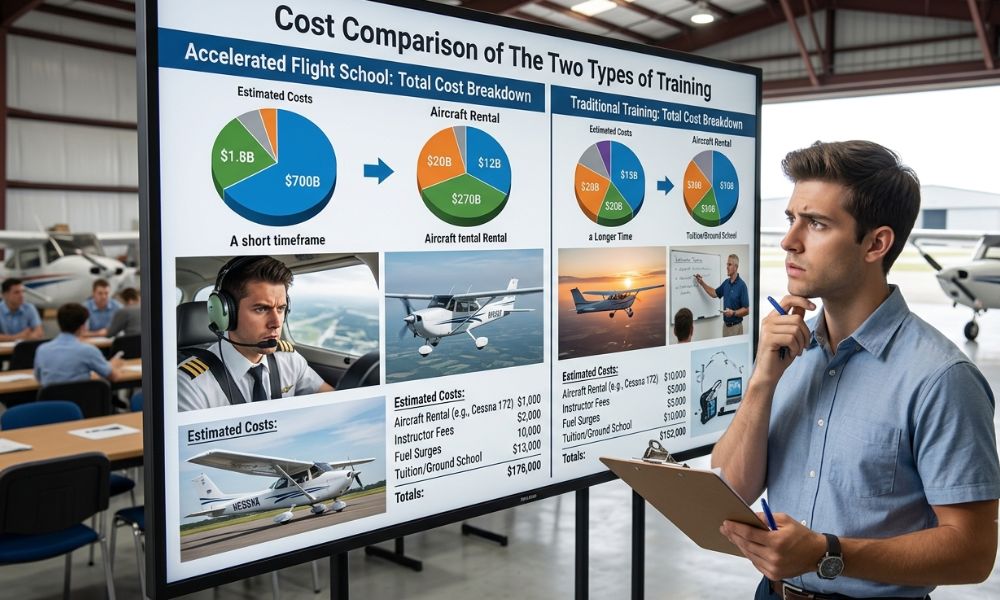
    Cost Comparison of The Two Types of Training

    When deciding between Accelerated Flight School vs Traditional Training: Which Is Better?, it is easy to confuse cost.

    Accelerated programs seem pricey because students are billed large sums in shortened time windows. Since trainers are paid progressively, traditional training may seem like a lower-cost solution.

    However, the total amount is strongly influenced by training efficiency.

    Students that fly less frequently may need a few additional hours to re-familiarize themselves with flying. The cost of those recurring lessons include things like aircraft rental fees, instructor charges and fuel.

    Students should look at more than just the advertised tuition amount by comparing before they enroll.

    Important expenses may include:

    • Aircraft Rental and Flight Instructor Fees
    • Live classes or online ground-school programs
    • Training aids, charts, books & equipment
    • Medical examinations and licensing expenses
    • Written examinations and practical tests
    • Flight hours above estimates of TAO packages
    • Transportation, accommodation, or temporary housing
    • Cancellation, rescheduling or aircraft change-fee

    A contingency fund must be in a realistic budget. Aviation training rarely goes in a straight line. If you’re also weighing whether to go through an FTO entirely or explore a self-funded training route, it’s worth comparing both financing paths before committing.

    Learning Retention and Skill Development

    One of the biggest advantages of accelerated training is that you keep repeating often.

    Flying consistently reinforces procedural memory. This is because students are exposed repeatedly to radio communications, checklists, aircraft control and navigation procedures conceptually and practically hands-on in the first five hours.

    Retaining in traditional training needs to be a more deliberate process.

    A student who only gets in the air once a week is ideal for using chair flying, simulator practice, going over his checklists, recording himself on radio calls and regular groundschool.

    Easier for Beginners: Which Training Style?

    Neither method is universally easier.

    Accelerated trainings are useful for novices as they can retain the new information. Students are rapidly able to correlate concepts learned in the classroom with actions taken in the cockpit. The drawback is cognitive saturation. It can be overwhelming to juggle learning aerodynamics, communications, navigation, regulations, aircraft systems and practical flying all at once.

    With traditional training, you have more space to breathe. Difficult content can be absorbed slowly by students. But if there are too many gaps between lessons, then it can break the continuity of learning.

    The best beginner schedule generally provides ample rehearsal without inducing mental fatigue.

    Schedule Flexibility

    This category is very much hitting the traditional training area in the head.

    If you are working full time, going to university, have a business or have a family then doing flight training on a daily basis may be unrealistic. Flying is made much more accessible through local flight schools providing lessons during the evening and weekends.

    Accelerated programs typically necessitate firmer schedule dedication. Although this structured training schema is sequenced with such care, skipping a few days can derail it altogether.

    So, anyone curious about Accelerated Flight School vs Traditional Training: Which Is Better? must first evaluate how much distraction-free time they actually have to train.

    Instructor and Aircraft Availability

    A strong program is only effective when the needed resources are present.

    When evaluating the local flight school, students need to start asking how many instructors and training aircraft are available. So a school with lots of students, but only a small fleet could find it hard to maintain regularised schedules.

    Instructor turnover also matters. When you have different instructors throughout the year, it can affect class procedures when they do not align with your students and their shift styles and expectations.

    Students should have to go in person to local airports. Speak with instructors. Observe the aircraft. Inquire about addressing maintenance interruptions and if aircraft replacements are available.

    Such nitty-gritty details probably say more than promotional material does.

    Weather and Local Airport Conditions

    Location is a crucial factor in flight training. Frequent storms, heavy rain, strong winds or fog can lead to cancellations and delay even an expedited pattern. The quality of training is also affected by airport conditions. While lasting experience with air traffic control is gained at extremely busy airports, the congestion can limit real flying time. While allowing departures with more replication in most cases, smaller airports can mean less time for complex traffic and quicker departures. When contrasting accelerated flight school vs traditional training keep local weather, airport activity, aircraft availability and their ability to keep your schedule on point in mind.

    What Is The Quick Answer For Recreational Pilots?

    This made traditional training well-suited for the recreational pilot.

    If someone who learns to fly for transportation or recreation, there is little reason (or incentive) to leave work or other responsibilities for an intensive process. A good local flight school can get you making steady progress without the pressure of things getting out of control.

    Throttle on throttles as such an fast personal pilot route need make moment regard for relaxation students along with administer ample additional time also settle wholeness.

    The choice is not made because of ambition or lack thereof, but rather lifestyle.

    How To Pick A Flight School Near You

    Do not select a school simply because they advertise the lowest cost or quickest degree completion when comparing local schools.

    Visit several schools when possible, compare instructors, aircraft, schedules, facilities and student support.

    How often can you realistically travel. Discover if the same instructor will typically be teaching you. Be sure to ask for clarification on what the quoted price of training will cover.

    You can also get a lot out of taking a discovery flight. It gives you a chance to sample the airplane, airport, instructor and general experience without beginning to part with large amounts of money.
    Advantage Accelerated Flight School Vs Traditional Flying Training

    Which is the best flight-training path for you? If your schedule is flexible, and you can cement with focused type of training that may be repetitive that’s suited for accelerated programs. This implies that traditional, self-paced programs are better for people who need more flexibility, prefer a slower alternative or wish to spread their costs over time.

    The best plan is the one that you can stick with. In addition to the options mentioned above, instructor quality, aircraft availability at location, local weather/cross airway traffic/airport infrastructure and cost/scheduling reliability all factor into the decision vice personal preference. Either way can create confident, competent pilots. You are not only looking to train faster but the environment that helps you safely learn, develop and achieve your long term flying goals.

  • Flight Schools vs Self-Funding: Pros, Cons and Cost Comparison

    Flight Schools vs Self-Funding: Pros, Cons and Cost Comparison

    Becoming a pilot is a rewarding ambition, but it demands a serious financial commitment. For new students, the choice typically comes down to two approaches: enrolling at a structured flight school or pursuing a more self-directed, independently funded path. Understanding the differences- in cost, structure, flexibility and long-term outcomes, helps beginners make a decision that fits their budget and goals.

    Training costs vary depending on location, aircraft type, instructor fees, licence requirements and the pace of training. Additional expenses such as examinations, study materials, equipment and transport can add considerably to the overall figure.

    For local students, comparing nearby flight schools and independent options across convenience, aircraft availability, instructor support, flexibility and structure is an important early step.

    Flight Schools and the Self-Funding Model

    A flight school typically provides a coordinated training environment covering ground instruction, flight lessons, instructor support, scheduling and the licensing process. This structured approach is particularly valuable for students who have never flown before.

    Self-funded training works differently. Rather than routing the entire programme through one institution, students pay for individual elements of training from personal savings or other legitimate sources as funds allow. This may involve arranging separate instructors, aircraft rental, examination fees and other training costs independently.

    The more meaningful comparison is not simply “school or no school” – many students enrolled at flight schools are also self-funding their tuition. The real distinction is between structured flight school training and independently managed, pay-as-you-go flying.

    What Makes Flight School Structure Important

    Starting flight training involves navigating licences, medical requirements, theoretical examinations and practical skills. A well-organised flight school consolidates many of these elements into a single, coherent pathway.

    Structured Training and Professional Guidance

    A structured syllabus guides students from foundational skills through progressively demanding exercises. Instructors can monitor performance, identify weak areas and adjust training accordingly. For beginners, this continuity is reassuring, each step builds on the last rather than being planned independently.

    Access to Aircraft and Instructors

    Flight schools maintain access to aircraft and instructors, which can simplify scheduling. However, the quality of that access varies considerably between schools. Before committing, students should ask about aircraft availability, maintenance procedures, instructor continuity and cancellation policies.

    Career-Oriented Progression

    Students targeting commercial aviation careers benefit from a training environment structured across multiple phases. A private pilot licence may be followed by additional ratings and certifications depending on career goals and applicable regulations. A clearly defined progression means each qualification builds toward a professional outcome rather than being treated as a standalone achievement.

    Potential Drawbacks of Flight Schools

    A structured environment is helpful, but not every flight school delivers value commensurate with its cost. Students should evaluate the total cost rather than any advertised package price. Before enrolling in any school, reading a dedicated guide on how to evaluate and choose the right FTO can help you ask the right questions and avoid common enrolment mistakes.

    Some potential disadvantages include:

    • Higher initial financial commitment
    • Extra flight hour charges above package estimates
    • Limited choice of instructors or aircraft
    • Training schedules that may conflict with work or study commitments
    • Add-on fees for administration or examinations not included in headline prices
    • Travel and accommodation costs where applicable

    The essential question is: what does the quoted price actually cover?

    The Added Flexibility of Self-Funding

    Self-funded training attracts students who prefer to invest incrementally. Those who cannot assemble a large sum upfront may prefer to set aside funds over time and pay for lessons progressively.

    Pay-As-You-Go Training

    Purchasing lessons individually gives students greater control over cash flow. It also accommodates those balancing flight training with full-time work or university study.

    Flexibility, however, comes with a caveat. Training gaps reduce skill retention and can require students to repeat exercises, reducing the efficiency of each logged hour. Disrupted progress increases both the time and cost needed to reach a standard.

    Greater Control Over Spending

    Self-funded students develop a detailed awareness of every expense. Aircraft rental, instructor fees, examination fees, study materials and licensing charges all become individually managed line items. This granular approach offers transparency and genuine insight into where the money goes.

    What Does Becoming a Pilot Actually Cost?

    The headline price of any flight training package rarely reflects the full expenditure. Total spending depends on the specific licence being pursued and how quickly the student progresses. A thorough breakdown of pilot course fees and what training truly costs in India is essential reading before committing to any programme.

    Typical expense categories include:

    • Aircraft rental
    • Flight instructor fees
    • Ground school
    • Written and theoretical examinations
    • Practical flight tests
    • Medical certification
    • Licensing and administrative charges
    • Aviation textbooks and study resources
    • Headset and personal equipment
    • Transport to the airport
    • Accommodation where required

    Additional flight hours deserve particular attention. Students do not all progress at the same rate, and budgeting only for the minimum advertised hours rarely reflects what training actually costs in practice.

    Comparing Flight Schools With Self-Funding

    A meaningful comparison considers far more than the opening price.

    Flight schools typically offer more structure, administrative support and access to established training resources. Self-funded arrangements allow greater spending control and timetabling flexibility but require significantly more personal organisation and planning.

    Geography also matters for local students. A provider that is slightly more expensive but substantially closer may save recurring transport costs and make consistent lesson frequency more achievable.

    FactorFlight SchoolSelf-Funding
    StructureUsually highDepends on arrangement
    SchedulingSchool-dependentPotentially flexible
    Financial controlModerateOften greater
    Instructor selectionMay be limitedPotentially broader
    Administrative supportUsually availableStudent’s responsibility
    Initial planningRelatively straightforwardRequires more research
    Career pathwayOften clearly definedMust be planned carefully

    The most economical choice is not always the lowest advertised hourly rate. Consistency, aircraft availability, instructor quality and training structure all influence the final cost.

    Local Options for Flight Training

    Location has a direct effect on training costs and consistency. Frequent travel to a distant school adds expense and makes maintaining a regular lesson schedule more difficult.

    Prospective students should research organisations operating locally and verify the standards applied by the relevant aviation authority. Rather than relying on marketing material, comparing DGCA-approved flying institutes in India gives a clearer picture of which schools meet verified regulatory standards.

    Useful questions to ask any local provider:

    • What licences and ratings does the school offer?
    • Which aircraft are available for training?
    • How many active instructors are currently assigned?
    • How are maintenance issues handled and how quickly?
    • What is the policy when a lesson is cancelled?
    • Are extra flight hours charged above the package?
    • What fees are included in the quoted price?
    • Is a payment plan available?


    These questions surface costs that may not appear in an initial consultation.

    Creating a Realistic Pilot Training Budget

    A sound budget accounts for both predictable and variable costs. Start with the published training requirements, then add a realistic allowance for additional hours and incidental expenses.

    Maintaining a financial cushion is sensible. Weather, aircraft maintenance, scheduling delays or slower-than-expected progress can all disrupt a training plan. Students who set aside a fixed monthly amount specifically for training develop a more sustainable and reviewable financial structure.

    Common Mistakes Beginners Should Avoid

    Comparing only the advertised aircraft rental rate is one of the most frequent budgeting errors. A lower hourly rate does not make a school cheaper if the aircraft is frequently unavailable or additional fees are applied elsewhere.

    Assuming that the minimum advertised hours apply to every student is another common mistake. Training progress is individual, and most students exceed the minimum before reaching licence standard.

    Before making any payment, read the full terms carefully. Refund conditions, aircraft availability guarantees, instructor charges, cancellation policies and additional fee structures all deserve close attention.

    Final Thoughts

    There is no universally correct answer in the flight school versus self-funding comparison. The right choice depends on personal finances, career goals, learning preferences, availability and location.

    Flight schools suit students who want a structured, guided route through training. Self-funding suits those who prefer to manage spending incrementally and are prepared to handle more of the administration independently.

    For many beginners, a hybrid approach is practical: structured instruction at a credible school, combined with careful financial management and regular comparison of options.

    The investment in becoming a pilot; in time, effort and money is significant. Comparing carefully early on avoids unwelcome financial surprises later. Evaluate the full training pipeline: hourly fees, instructor quality, aircraft access, school location and the realistic likelihood of additional hours. A well-researched decision creates a far stronger foundation for the journey ahead.

  • Flight School vs Air Force Pilot Training: Key Differences Explained

    Flight School vs Air Force Pilot Training: Key Differences Explained

    Pilot training is a dream for many students in India, but there are two fundamentally different paths to the cockpit: a civilian flight school or pilot training through the Indian Air Force. Understanding the key differences helps aspiring pilots determine which route aligns with their career goals, budget, lifestyle and personal interests.

    Civilian flight schools primarily prepare students for careers in commercial aviation – airlines, charter services and private flying. The Indian Air Force trains pilots for military operations and national defence. Both routes command respect, but the training systems, costs, entry requirements and career commitments differ significantly.

    India: Civilian Flight School Overview

    Civilian aviation flight schools train individuals to fly aircraft within a structured regulatory framework. In India, students undergo ground school and the required flying hours at a Flying Training Organisation recognised by the Directorate General of Civil Aviation.

    Training typically covers aircraft handling, navigation, meteorology, aviation law, radio communication, emergency procedures and flight planning. Most students work toward a Commercial Pilot Licence along with additional ratings required for professional aviation. Before selecting any school, it is worth comparing DGCA-approved flying institutes in India to understand what verified, well-structured organisations look like in terms of aircraft availability, instructor quality and course completion standards.

    Civilian training offers one significant advantage: flexibility. Students can compare schools, evaluate costs, assess aircraft availability and choose a location that suits them. They also have more control over the pace at which they complete training.

    Indian Air Force Pilot Training: What Is It?

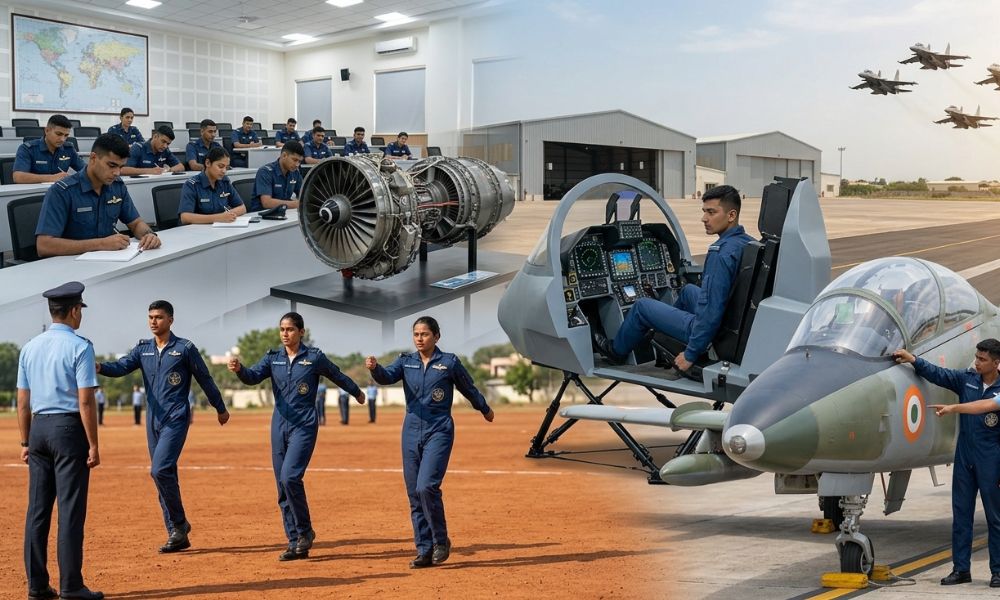
    IAF cadets in classroom training, flight simulator, drill practice, and on the tarmac with a fighter jet

    Indian Air Force pilot training is a military officer programme, not simply a flying curriculum. Candidates selected through the Air Force Common Admission Test and related processes undergo military, academic, physical and flying training as a combined programme.

    The training teaches not only how to fly but also leadership, discipline, resilience, teamwork and decision-making under operational pressure. Air Force pilots may eventually fly advanced military aircraft on active missions. Anyone pursuing this route must have a genuine commitment to military service, not just an interest in flying.

    Entry Requirements and Selection

    Entry requirements represent one of the starkest differences between the two paths.

    Civilian flight school admission follows a comparatively straightforward process. Students must satisfy educational qualifications, age criteria and DGCA medical eligibility requirements before beginning professional training.

    Indian Air Force selection is far more competitive. Candidates are assessed on academic merit, aptitude, medical fitness, physical stamina, psychological profile, leadership qualities and communication skills. A strong academic record alone is insufficient. Candidates must also demonstrate discipline, confidence, problem-solving ability and composure under pressure.

    Cost of Training

    Cost is one of the most significant practical differences between the two paths.

    Civilian pilot training in India involves a substantial personal financial commitment. Students typically pay for aircraft rental, instructor fees, examinations, simulator sessions, medical tests, study materials, accommodation and transport. A clear understanding of pilot course fees and what training actually costs in India is essential before committing to any programme, as the total expenditure is considerably higher than the advertised hourly rate suggests.

    Air Force training operates differently. Selected candidates undergo training as part of their military service and do not pay standard civilian tuition fees. However, this does not mean the path is without cost. Candidates commit to military responsibilities, rigorous discipline, postings and defined service obligations.

    The key distinction:

    • Civilian flight school — students fund their own training and retain control over location and career choices
    • Indian Air Force — training is part of military service, structured and less flexible, oriented toward defence and operational flying.


    Training Style and Environment

    Civilian flight schools are generally more adaptable. Students can schedule flights around budget, weather, instructor availability and aircraft access. The environment is professional but not militarised.

    Air Force training is highly regimented. Trainees follow a structured daily programme combining military drills, physical conditioning, classroom instruction and flying assessments. The training goes beyond aircraft handling — it conditions pilots to make rapid, sound decisions in high-pressure operational environments.

    How Training Intensity Differs

    Civilian students work through theory examinations, navigation exercises, airmanship practice and skills tests. There is typically some flexibility to revisit exercises if additional practice is needed.

    Air Force trainees simultaneously manage academic coursework, physical fitness requirements, simulator training, flying progression and military obligations. The pace is faster and expectations are higher, reflecting the operational demands of military aviation.

    Both paths require genuine discipline, but military training consistently operates under greater pressure and imposes a more demanding lifestyle.

    Aircraft Used During Training

    Civilian students typically begin on light training aircraft, learning the fundamentals of takeoff, landing, navigation, stall recovery, radio communication and emergency procedures. Many progress to multi-engine aircraft and more advanced avionics in later stages.

    Indian Air Force trainees eventually transition to advanced military aircraft with more complex systems, higher performance envelopes and demanding operational procedures. Both civilian and military pilots share the same foundational training principles, however, regardless of the aircraft they ultimately fly.

    Lifestyle Differences

    The lifestyle implications of each path are considerable and often underestimated.

    Civilian pilots have significant freedom over where they work and train. Once qualified, they can pursue employment with airlines, charter operators, flight schools, cargo companies or corporate aviation organisations.

    Air Force pilots have less autonomy over their location and duties. They may be posted to different bases, assigned specific roles or redeployed according to operational requirements.

    Civilian training suits students who want flexibility and a direct route into commercial aviation. The Indian Air Force suits those who want to combine flying with military service and are comfortable with the structure and commitment that entails.

    Career Paths After Civilian Flight School

    Civilian pilots in India typically build experience progressively before becoming eligible for airline positions. Many begin as flight instructors, move into charter or corporate flying and eventually reach the airlines. For students whose primary goal is an airline career, civilian flight training is generally the more direct path.

    That said, completing flight training does not guarantee employment. Airlines evaluate technical knowledge, how many flight hours a candidate has accumulated, medical fitness, communication skills and interview performance before making any offer.

    Career Opportunities After Indian Air Force Training

    Indian Air Force pilots serve in a highly disciplined and technically demanding operational environment. After completing their required service period, many military pilots transition to civilian aviation, bringing strong flying experience and professional credibility.

    However, the Indian Air Force should not be viewed primarily as a pathway to an airline career. The principal commitment is military service, and career decisions are shaped by that obligation throughout the period of service.

    Which Path Is Right for You?

    There is no single correct answer.

    Civilian flight school is typically better suited to students who want a commercial aviation career with flexibility over location, employer and career pace.

    Indian Air Force pilot training is more appropriate for candidates who are drawn to military service, can meet the rigorous selection standards and are prepared for the discipline, postings and long-term service commitments involved.

    Final Thoughts

    The choice between civilian flight school and Indian Air Force pilot training comes down to personal goals, financial circumstances and lifestyle priorities.

    Civilian flight schools offer flexibility and a clear route into commercial aviation, funded at personal expense. Military aviation provides structured professional training and operational flying experience, but comes with stringent selection criteria, disciplined living conditions and defined service obligations.

    For most students targeting an airline career in India, civilian training is the more straightforward path. For those who want to combine flying with military service, the Indian Air Force offers a challenging and fulfilling alternative. Understanding what civilian pilots earn at each stage from CPL through to ATPL can help students assess whether the financial investment in civilian training aligns with their long-term career expectations before making a final decision.

  • How to Choose the Right FTO in Aviation [2026]

    How to Choose the Right FTO in Aviation [2026]

    Learning to become a commercial pilot begins long before the first solo flight. It starts with selecting a Flying Training Organisation (FTO) that can provide safe aircraft, qualified instructors and a reliable schedule. For Indian students, additional factors such as regulatory approval, weather conditions, location and the true cost to obtain a Commercial Pilot Licence all shape the decision. Understanding what pilot training actually costs in India before approaching any FTO puts you in a far stronger position to evaluate what you are being offered.

    A polished website, a glamorous fleet photograph or a promise of fast completion does not reflect daily operations. Students need to examine how often they can actually fly, how the academy manages maintenance disruptions and whether instructors remain available throughout the full course.

    For families financing pilot training for the first time, choosing the wrong FTO can lead to wasted hours, unexpected costs and extended stays away from home. Making the right choice requires evidence, not marketing material.

    What Is an FTO in Aviation?

    An FTO is an organisation licensed to provide flight training for pilot certificates and ratings. In India, the Directorate of Flying Training under the Directorate General of Civil Aviation approves organisations that train candidates for private and commercial pilot licensing. The DGCA also releases performance data ranking FTOs across different training centres.

    A reliable FTO is not simply a provider of aircraft. It creates a disciplined environment in which students develop navigation, meteorology, radio communication, aircraft control and sound judgement.

    Verify DGCA Approval First

    The first step in choosing the right FTO is verifying the organisation’s current regulatory status. Do not rely on an admission counsellor, a social-media advertisement or an old approval certificate. Confirm the information directly through official DGCA sources and ensure the approval covers the specific course you intend to complete at the training base you plan to attend.

    The DGCA published an FTO ranking for April 2026. This can be a useful initial screening tool, but it should not be treated as an automatic recommendation. A ranking cannot capture aircraft access, instructor conduct, campus conditions or student satisfaction on a day-to-day basis. A comparison of DGCA-approved flying institutes in India provides a broader view of what verified, well-structured organisations look like in practice.

    Examine Aircraft Availability and Maintenance

    Many academies advertise a large fleet, but the figure that actually matters is the number of serviceable aircraft available for active students. Multiple aircraft undergoing maintenance simultaneously will restrict training capacity.

    Ask how many aircraft are currently flying, how many students are enrolled and how many flights an average student completes per week. The student-to-aircraft ratio can reveal congestion that sales material conceals. When evaluating any FTO, quality of access should be prioritised over headline fleet numbers.

    Safety is not determined by aircraft age alone. An older but meticulously maintained trainer may be a better learning environment than a newer aircraft supported by weak maintenance practices. Pay attention to how quickly defects are addressed and whether unserviceable aircraft are kept out of operation until properly cleared.

    Evaluate Instructors and Safety Culture

    Instructors shape a student pilot’s habits, decision-making and confidence. Ask about their qualifications, total experience and turnover rate. Frequent instructor changes disrupt continuity, as each new instructor must rebuild an understanding of a student’s progress, weaknesses and learning style.

    Find out how many active students each instructor is currently assigned to. Students must also feel free to report concerns, question unsafe decisions and decline a flight when conditions do not permit it. An academy that dismisses reported defects or pressures instructors to overlook safety concerns is a serious warning sign.

    Choosing the right FTO means assessing not just instructor availability but what the organisation actually does when commercial pressure conflicts with safety.

    Explore Flying Rate and Completion Time

    The course duration advertised by any FTO is an estimate, not a guarantee. Monsoon conditions, winter fog, aircraft maintenance schedules, instructor availability, examination timetables and airspace congestion all affect progress.

    Ask how long students in recent batches actually took to complete their training not the fastest result ever achieved by a single strong candidate. Speak to students who began at different times of year and at different bases. Long gaps between flights erode skills, forcing students to repeat exercises and adding both cost and time to the overall programme.

    Understand the Complete Training Cost

    The lowest advertised price can become the most expensive programme once additional charges are added. Request a written breakdown that includes admission fees, ground school, aircraft rental, instructor fees, simulator sessions, fuel and landing charges, skill tests, taxes, accommodation and transport.

    Clarify whether the package covers the full flying hours requirement and what happens and what it costs, if additional training is needed. Before committing financially, confirm the current DGCA eligibility requirements for age, educational qualifications and medical fitness directly from official sources, as these are subject to change.

    It is also worth understanding how many flight hours are required to reach CPL standard and become hireable, so that the total flying commitment — and its cost — is clear before you sign anything.

    Examine the payment schedule carefully. Milestone-based payments reduce financial exposure compared to paying the full training fee upfront. Review the refund policy, administrative deductions and the conditions under which unused flying funds are returned.

    Consider Location, Weather and Airspace

    India’s diverse climate affects training continuity differently across regions. Monsoon rain, winter fog, strong winds and extreme heat can limit flying at certain bases for weeks at a time. Ask about seasonal disruptions and whether students at that base regularly experience extended gaps in flying.

    Airspace also matters. Busier controlled environments offer valuable radio and procedural experience but can limit circuit practice and sortie frequency. Less congested bases may allow more repetitions per session. A well-chosen location delivers the operational exposure needed without creating unnecessary delays in access to aircraft and airspace.

    Talk to Current and Former Students

    Independent student feedback is the most reliable information available. Ask current trainees how frequently they fly, whether fees have remained consistent with what was quoted and how quickly cancelled lessons are rescheduled.

    Former students can describe the full experience from enrolment through to licence issuance, including how the academy handled paperwork, delays and the final stages of training. Do not rely solely on testimonials curated by the academy itself. Look instead for recurring patterns across multiple independent accounts, both positive and negative.

    Visit the FTO and Identify Red Flags

    A physical visit reveals what online marketing does not. Inspect the aircraft, classrooms, briefing rooms, simulator facility and maintenance area. Speak directly with instructors and ask how the daily flying schedule is managed. The environment should feel structured, professional and transparent.

    Warning signs include guaranteed airline job placement promises, unrealistic CPL timelines, pressure to make immediate payment, missing fee documentation, restricted student access to facilities, unclear maintenance responses and repeated unexplained operational halts.

    Choosing the right FTO is a verification process, not a sales engagement. Assess documentation against verbal claims before any payment is made.

    Make an Evidence-Based Final Decision

    Build a comparison of shortlisted FTOs. Check approval status, safety record, number of serviceable aircraft, instructor-to-student ratio, weekly flying frequency, average course completion time, total cost, refund policy and student reviews. Prioritise safety and operational reliability over branding or social-media presence.

    Complete all academic qualifications and a DGCA medical examination before making any payment. Medical ineligibility discovered after enrolment creates significant financial and logistical complications that no FTO can resolve on your behalf.

    The right FTO is not necessarily the largest or most prominent. It is the one that consistently delivers safe, well-managed training within a cost structure that is honest and transparent. It should enable an aspiring Indian pilot to build competency, sound judgement and professional discipline without avoidable financial or operational setbacks along the way. Understanding what a CPL in India qualifies you for and what pilots earn at each stage can also help you evaluate whether the training investment is aligned with your long-term career goals before you commit.

  • Best Country for Pilot Training in 2026 | VFTI

    Best Country for Pilot Training in 2026 | VFTI

    For any Indian student, choosing a country for flight training is a significant decision. It has direct implications for costs, timelines, licence conversions and airline employment opportunities. Popularity alone does not make a destination the right fit. The best country for pilot training in 2026 depends on a student’s budget, career plan and ability to meet Indian regulatory requirements.

    Those applying to Indian airlines must ultimately answer to the Directorate General of Civil Aviation. Under DGCA CPL requirements in India, a Commercial Pilot Licence candidate must be at least 18 years of age, have completed 10+2 or equivalent with Physics and Mathematics, and satisfy medical, examination, training and flying stage requirements.

    Why Indian Students Consider Training Abroad

    Many Indian students are drawn to training abroad for stable weather, uncongested airspace and consistent flying windows. Foreign programmes can also offer exposure to different airspace environments and international radio procedures.

    However, a foreign CPL does not automatically convert to an Indian licence. Students who want to fly commercially in India must go through the DGCA licence conversion process and meet all Indian licensing requirements. This is a specialised procedure managed entirely by DGCA, and students should research it thoroughly before committing to an overseas academy. The best country for pilot training in 2026 should never be chosen solely on the basis of an advertisement promising fast completion or reduced hourly rates.

    For students interested in the conversion pathway specifically, understanding what the best pilot licence conversion academy in India involves is a useful step before making any overseas enrolment decision.

    India: The Direct Option Most Aligned With DGCA

    India is the most straightforward option for many candidates. Training within the domestic system means students become familiar with Indian weather, airspace and radio procedures from the outset. It also eliminates costs associated with foreign visas, accommodation and currency exposure.

    The single largest benefit is regulatory alignment. Training in India produces an Indian licence directly, removing the need to complete a foreign qualification and then navigate a conversion process afterwards.

    Training quality and pace vary between academies. Students should investigate aircraft availability, monthly flying hours logged by current students and recent completion records. India can be the right choice when the selected academy offers reliable pricing, consistent scheduling and a strong safety culture.

    South Africa: Value With Good Weather

    South Africa attracts Indian students seeking lower flying costs and favourable weather. Quieter airspace can make it easier to practise circuits and cross-country navigation during early training stages.

    School selection requires care. Verify that the academy is properly approved, check its maintenance arrangements, accommodation standards and support with documentation for Indian licence conversion.

    A low headline price is misleading when it excludes examination charges, fuel surcharges, equipment costs, additional hours or conversion expenses. South Africa can represent good value — but only if the full cost is calculated honestly, not just the opening quote.

    United States: Broad Aviation Infrastructure

    The US offers an extensive general-aviation network and varied training environments. Students gain exposure to controlled airspace, regional airports and professional radio communication standards.

    A well-managed school with a reliable fleet can support efficient progress. However, the full budget must account for visa compliance, travel, accommodation, insurance and FAA-to-DGCA licence conversion. Currency fluctuations can also alter the final cost unpredictably.

    Students who prioritise wide operational exposure and can manage a less predictable financial commitment may find the United States a strong option.

    Canada, Australia and New Zealand

    Canada offers structured flight training with the added dimension of winter flying, which can strengthen decision-making and weather management skills, though it may slow overall progress in some regions.

    Australia has well-regarded aviation training organisations, large training airspace and strong airline industry standards. For many Indian families, the cost of tuition and living expenses remains a significant drawback.

    New Zealand offers coastal scenery, variable weather and challenging terrain that can sharpen situational awareness. As with any destination, costs and timelines must be compared carefully against what the training environment actually delivers.

    The best country for pilot training in 2026 is the one that remains financially viable across the full span of training, licence conversion and pre-employment preparation, not just the first few months.

    Compare the Complete Cost

    The headline price of any academy rarely tells the full story. A realistic budget must include aircraft hire, instructor fees, simulator hours, examinations, medicals, books, headset, uniform, accommodation, food, transport, visa fees, insurance and any additional flying hours required. A detailed breakdown of pilot course fees and what they typically cover in India can help students benchmark what a genuine all-in cost should look like before comparing overseas options.

    Request a written fee breakdown from any school under consideration and confirm whether prices are fixed or fuel-linked. Check the payment schedule, refund policy and the fee applicable if a flight test needs to be retaken.

    A school that interrupts training or requires multiple revision flights can become far more expensive than its initial price suggested. A modestly priced school with reliable aircraft and stable instructors may cost less overall than a cheaper-looking alternative with operational inconsistencies.

    Medical and Academic Preparation

    Candidates should confirm all academic and medical requirements are complete before paying any significant training fee.

    • Confirm eligibility, specifically 10+2 with Physics and Mathematics
    • Complete a DGCA Class 2 Medical Examination before the start of flight training
    • Obtain DGCA Class 1 medical clearance at the Commercial Pilot Licence stage
    • Use only DGCA-approved medical examiners and follow the correct documentation process
    • Resolve any medical, academic or documentation issues before departing for overseas training
    • Keep medical certificates, academic records and identification documents current and organised
    • Confirm eligibility for overseas training and the requirements for converting a foreign licence in India

    Addressing these steps early avoids delays, additional costs and licensing complications. Even the best training country cannot compensate for missing eligibility, incomplete documents or inadequate preparation.

    Choosing the Right Flight School

    Comparing countries is only part of the decision — the quality of the individual school usually matters more than the destination. Rather than relying on testimonials, speak directly to current students. Ask how many aircraft are actively flying, how frequently students are completing flying hours and how long recent CPL candidates took to finish their training.

    Be cautious of schools that promise guaranteed airline employment, obscure fees within broad tuition descriptions or request large upfront payments with vague refund terms. A credible academy should be as forthright about its limitations as it is about its strengths.

    Comparing DGCA-approved flying institutes in India is a useful reference point for understanding what a transparent, well-structured training organisation should offer — whether you ultimately train domestically or abroad.

    VFTI also guides Indian aspirants in comparing training paths, understanding DGCA-oriented planning and evaluating the cost implications of training in India versus overseas.

    Final Verdict

    India offers direct DGCA regulatory alignment and is the most straightforward choice for the majority of Indian students. South Africa offers competitive pricing and favourable weather. The United States provides broad aviation exposure. Canada, Australia and New Zealand each offer disciplined training environments with their own logistical and financial considerations.

    There is no single country that suits every student. The right choice is one that provides recognised instruction, safe flying conditions, reliable aircraft, qualified instructors, honest pricing and a clear pathway to an Indian licence.

    Students should verify requirements, calculate total costs and speak to alumni before enrolling anywhere. The right country, and the right school gives an aspiring aviator the foundation to build skill, confidence and sound professional judgement without creating avoidable financial or licensing difficulties along the way.

  • How Many Flight Hours Do You Need to Get Hired?

    How Many Flight Hours Do You Need to Get Hired?

    In the journey to become a pilot, earning a Commercial Pilot Licence feels like the moment everything becomes real. In practice, it is the beginning of a more demanding phase. Students often ask: how many flight hours do you need to get hired? The answer depends on the class of licence, the type of vacancy, the employer’s requirements, and the quality of experience built during training.

    Flight hours represent practical exposure. They show that a candidate has operated an aircraft, communicated with ATC, assessed weather and followed standard operating procedures. But airlines do not hire on a single raw number. Technical knowledge, medical fitness, simulator performance, communication skills and professional behaviour carry equal weight.

    CPL Minimum Flight Hours in India

    The DGCA requires applicants for a Commercial Pilot Licence on aeroplanes to have completed at least 200 flight hours. These hours must include specific quantities of pilot-in-command time, cross-country flying, instrument flying and night flying. Applicants must also satisfy DGCA CPL requirements covering regulatory, examination and medical eligibility before the licence is issued.

    The 200-hour mark is what most Indian flight students work toward. It is a licensing threshold not a job guarantee.

    How many flight hours you need to get hired cannot be answered by the CPL minimum alone. A candidate may reach 200 hours and still wait for the right opening, particularly if their credentials are thin or their simulator and technical performance has not been tested rigorously.

    Is a 200-Hour CPL Sufficient for an Airline?

    Recent CPL holders with approximately 200 hours may be eligible for selected trainee pilot or junior first officer positions. Eligibility depends entirely on the role. Recruitment pathways exist for low-hour pilots as well as experienced first officers, and the two are very different.

    Indian airlines typically require:

    • A valid DGCA-issued CPL
    • A current Instrument Rating
    • A Multi-Engine Rating
    • A valid Class I medical certificate
    • Radio telephony credentials
    • The required aviation English proficiency
    • A valid aircraft type endorsement, where applicable

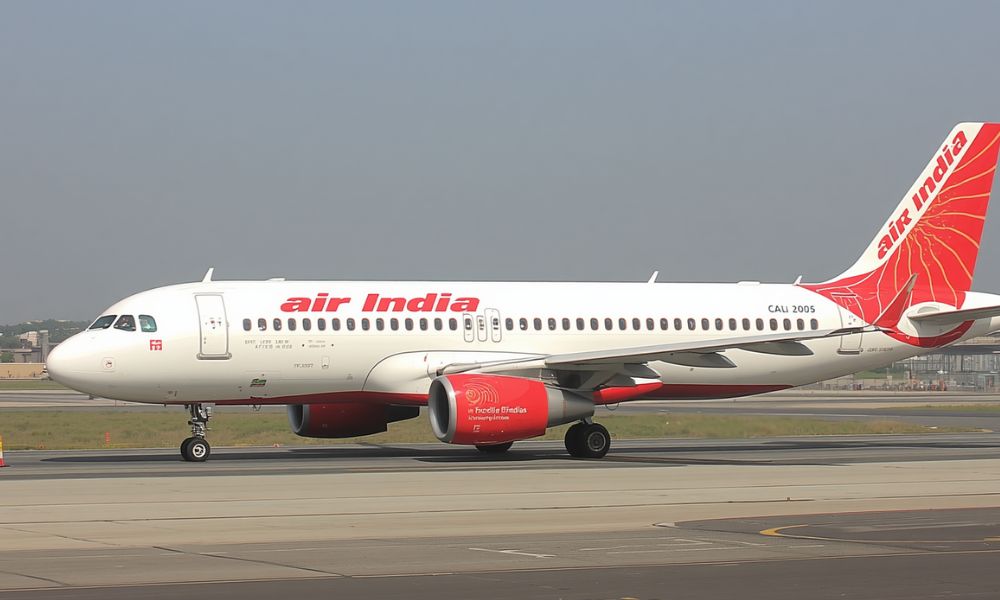
    Air India’s published co-pilot criteria, for instance, include professional licensing, an Instrument Rating and Class I medical fitness, along with relevant aircraft credentials.

    A new pilot with around 200 hours could enter an appropriate selection process, but would not be eligible for every airline vacancy. Understanding what a CPL in India actually qualifies you for — beyond the licence itself, it helps candidates set realistic expectations before applying.

    Cadet Pilot Programmes in India

    Cadet programmes operate on a different model. They take selected students from initial training through to airline readiness, meaning candidates can apply before completing commercial flight training.

    The Air India Cadet Pilot Programme, for example, assesses applicants on academic background, age, citizenship, English language proficiency and medical fitness. Candidates are not expected to arrive as certified commercial pilots — their flying experience is built during the programme itself.

    In this context, the answer to how many flight hours you need to get hired may initially be zero. Admission is competitive, training is demanding, and employment after completion depends on the airline’s operational requirements at that time. Air India has stated that successful candidates receive offers based on the needs of the airline group.

    Cadet programmes offer a structured pathway, but students should examine costs, financing options, training locations, medical requirements and the precise terms of any employment offer before applying.

    First Officers With Type Rating Training

    A type rating qualifies a pilot to fly a specific aircraft such as the Airbus A320 or Boeing 737. More experienced first officer roles may require a type rating and a minimum number of hours on that aircraft after line release.

    Air India, in May 2026, advertised an A320 co-pilot vacancy requiring a minimum of 500 hours on the Airbus A320 family after line release. This figure relates to one specific experienced-pilot vacancy and should not be read as a standard minimum for all first officer positions in India.

    Roles range from trainee pilots and newly type-rated pilots through to experienced and senior first officers. Candidates should always refer to official vacancy notices rather than figures circulating on social media or through unofficial training centres.

    Hours Required to Become a Captain

    Command positions carry a different set of requirements entirely. Candidates typically need an Airline Transport Pilot Licence, substantial total hours, significant pilot-in-command time, and current aircraft type experience and proficiency checks.

    Air India’s published captain requirements include a valid ATPL, a current Instrument Rating, proficiency checks, a Class I medical and radio telephony credentials.

    The flight hours needed to reach a command role are in a different category from entry-level hiring. Captain positions are for pilots with deep operational experience, leadership capability and aircraft-specific knowledge built over many years.

    The Type of Flight Time: Why It Matters

    Total flight time is only one element of a pilot’s logbook. Airlines often examine how those hours were accumulated.

    Pilot-in-Command Time demonstrates responsible decision-making and ownership of the aircraft. It builds independence, situational awareness and sound judgement.

    Cross-Country Flight Time develops navigation, route planning, fuel management and weather assessment. It also exposes students to different airports, airspace environments and ATC procedures.

    Instrument Flight Time reflects a pilot’s ability to fly accurately when visual references are limited. In commercial aviation, instrument procedures must be followed consistently in changing weather and reduced visibility.

    Multi-Engine Experience introduces more complex aircraft systems and engine-failure handling. This is directly relevant for pilots targeting airline or charter operations.

    Night Flight Time builds instrument discipline, spatial awareness and operational confidence, and prepares students for the irregular schedules of commercial flying.

    Two candidates with 200 hours can differ significantly in ability. One may have stronger instrument currency, more disciplined flying habits and better multi-engine exposure. Purposeful experience outweighs raw hours logged without structure or intent.

    What Indian Airlines Evaluate Beyond Flight Hours

    The airline selection process typically includes written examinations, aptitude tests, psychometric assessments, group discussions, interviews, document verification and simulator evaluations. Meeting the minimum flight hours satisfies an eligibility condition — it does not guarantee successful performance in any of these stages.

    Recruiters commonly assess candidates on:

    • Flight instrumentation and systems knowledge
    • Meteorology and navigation
    • Aviation regulations
    • Performance calculations
    • Standard operating procedures
    • Communication and aviation English
    • Teamwork and workload management
    • Decision-making under pressure

    Simulator training is one of the most effective ways to prepare for this stage. Airlines use simulator evaluations to assess instrument scanning, procedural accuracy and crew coordination under realistic conditions and candidates who have practised these skills in a structured environment consistently perform better than those who have not.

    A strong logbook will not compensate for poor decision-making, weak communication or an inability to work effectively alongside another pilot.

    Low-Hour Pilot Jobs in India

    Jobs do exist for low-hour pilots, though availability depends on market conditions. Options include cadet programmes, trainee pilot roles, flight instructor positions and selected charter or general aviation jobs.

    A flight instructor role allows a pilot to build hours while developing communication and decision-making skills. However, instructor ratings carry their own eligibility requirements. The DGCA requires a minimum of 250 total hours for an Assistant Flight Instructor Rating, along with additional specific criteria.

    Candidates should avoid intermediaries promising guaranteed airline placements. Apply only through official airline career portals or verified recruitment channels.

    How to Choose a Flying School in India

    The quality of the Flying Training Organisation has a direct impact on how efficiently a student accumulates the required hours. Before enrolling, investigate aircraft availability, instructor capacity, maintenance reliability, fee transparency and average training completion time. A list of DGCA-approved flying institutes in India provides a useful starting point for comparing verified options.

    The DGCA’s ranking framework for approved Flying Training Organisations includes completion time as a performance indicator – how long, on average, students take to complete the required flying experience.

    A school advertising a low rate is not automatically the cheaper option. If aircraft are frequently unavailable or flights are regularly delayed, the true cost of training rises considerably. Consistent, well-managed flying hours matter far more than a low advertised hourly rate.

    How to Strengthen Your Chances of Getting Hired

    Maintain an accurate logbook and keep all licences, ratings and medicals current. Prepare thoroughly for technical examinations and interviews. Build confidence in aviation English, radio communication and knowledge of the aircraft types operated by your target airlines.

    Use simulator sessions to sharpen instrument scanning, procedural accuracy and crew coordination. The objective is genuine competency not rote rehearsal of checklist sequences.

    The Indian aviation market moves in cycles. Fleet expansion periods bring increased recruitment; operational and economic uncertainty can slow it. Staying consistently prepared means that when the right vacancy opens, you are already ready.

    Final Answer

    India requires approximately 200 flight hours for a Commercial Pilot Licence, but this alone does not secure an airline position. Cadet programmes may accept candidates with no prior flying hours. Low-hour CPL roles are available in some market conditions . Experienced first officer positions typically require type-rated hours on a specific aircraft. Captain roles demand considerably more. The answer to how many flight hours you need to get hired varies by role, airline and timing.

    Qualifications, technical knowledge, communication, discipline and judgement matter just as much as the number in your logbook. Understanding what pilots in India earn across CPL and ATPL levels can also help you map the financial reality of each career stage before committing to a training path.

    Read official vacancy notices, keep your credentials current and build hours with purpose not just to reach a number.

  • 15 Highest-Paying Jobs for Flight School Students in 2026

    15 Highest-Paying Jobs for Flight School Students in 2026

    When professional pilot training comes at the cost of time and money, choosing aviation as a career is quite a big decision to make. Before committing, it helps to get a clear picture of pilot course fees and duration in India so you understand what the investment actually involves. For aspiring pilots in India, opportunities reach well beyond the cockpit of one carrier. The list below covers 15 highest-paying jobs for flight school students in 2026: passenger, cargo, corporate, helicopter, instruction, air traffic control, safety and drone management.

    India is witnessing a significant boom in aviation workforce growth. The Ministry of Civil Aviation stated in November 2025 that the country may need around 30,000 pilots in the next 15 to 20 years. It has also launched a biannual ranking of DGCA-approved Flying Training Organisations for greater transparency in helping students compare training providers.

    The salary figures referred to below are indicative and not guaranteed. Compensation differs depending on employer, aircraft type, flight hours, licence held, location, allowances and experience.

    The Need for Flight Training and Why It Is Worth the Money

    Flight school builds skills in aerodynamics, aircraft systems, meteorology, navigation, air regulations, radio communication, cockpit procedures and human performance. The same competencies support flying as well as non-flying aviation careers.

    To obtain a Commercial Pilot Licence in India, an applicant must have reached the age of 18, passed 10+2 or equivalent with Physics and Mathematics, and fulfilled medical, exam, training and flying stage requirements.

    Airline Captain

    As a professional pilot, the most rewarding long-term career is usually airline captain. Captains are responsible for the overall operation of passenger aircraft, oversee crews, make operational decisions and retain ultimate responsibility for safety.

    This position requires an Airline Transport Pilot Licence, experience across multiple aircraft type-ratings and years of reliable service. According to pilot salary data in India for 2026, experienced captains may earn ₹50 lakh or more annually, though packages vary widely.

    Commercial Airline Pilot

    Most commercial airline pilots begin as first officers. They assist with flight planning, heading and altitude selection, radio calls, checklists, systems monitoring and decision-making.

    Even after flight school, this remains one of the most sought-after careers because it offers a clear progression path, travel opportunities and strong long-term earning potential. Most candidates undergo additional simulator training and obtain an aircraft type rating before being hired by an airline.

    Corporate Jet Pilot

    Corporate pilots fly company executives, private clients and high-profile passengers on schedules that suit those they serve. The work involves upscale business jets, personalised service, non-commercial travel routes and often rapidly changing itineraries.

    Highly experienced long-range aircraft pilots can earn top salaries. They must be versatile, discreet, client-oriented and ready to operate out of smaller airports with limited ground infrastructure.

    Cargo Airline Pilot

    Cargo pilots carry parcels, medical supplies, industrial equipment and other freight. Most cargo flights operate at night, but the field offers competitive salaries and opportunities to fly larger aircraft.

    The air cargo field is becoming increasingly compelling given the growth of India’s e-commerce and logistics industries. It may appeal to pilots who enjoy operational flying but prefer not to work in direct passenger service.

    Helicopter Pilot

    Helicopter pilots serve tourism, offshore transport, emergency medicine, surveying, rescue, infrastructure projects and VIP travel. Rotary-wing flying requires specialised training and precise aircraft control.

    The strongest salaries in this field typically come from demanding roles such as remote site operations, offshore rigs, emergency response and corporate travel.

    Flight Instructor

    The flight instructor trains student pilots, demonstrates manoeuvres, maintains safety oversight, conducts pre-flight briefings and prepares candidates for flight tests.

    While the pay may be lower than airline flying, instructing is an effective way to log flight hours while building technical knowledge. Experienced instrument instructors can move into examiner, management, simulator or airline training roles.

    Air Traffic Controller

    Air traffic controllers direct aircraft, issue clearances, ensure safe separation and manage traffic in and around busy airspace. This is a ground-based role, though flight training experience is a useful foundation.

    In a 2025 recruitment advertisement, the Airports Authority of India listed an annual CTC of ₹13 lakh for Junior Executive posts in Air Traffic Control, along with associated benefits.

    Aircraft Dispatcher

    Airline dispatchers work alongside pilots to plan safe and efficient flights. They assess weather, routes, fuel parameters, aircraft limitations, airport conditions and operational risks.

    Major airlines typically reward accumulated experience because dispatcher decisions directly affect safety, on-time performance, fuel efficiency and operating costs.

    Aviation Safety Officer

    Aviation safety officers collect hazard data, investigate incidents, assess regulatory compliance and improve risk-control processes. They may work for an airline, airport, charter company, maintenance organisation or training school.

    Flight experience reinforces their understanding of cockpit workload and operational reality, supporting progression into senior safety and compliance leadership roles.

    Flight Operations Manager

    Flight operations managers handle crew scheduling, route documentation, regulatory compliance and operational disruptions. The role combines meticulous planning with safety-critical judgement.

    It typically suits experienced pilots who want a leadership position while remaining close to aircraft operations.

    Drone Pilot and UAV Specialist

    Drone pilots work across agriculture, mapping, construction, filmmaking, inspection, disaster response, logistics and security operations.

    In 2025, government data showed that India had more than 26,000 Remote Pilot Certificates and 172 Remote Pilot Training Organisations, demonstrating how rapidly the drone ecosystem has expanded.

    Aviation Consultant

    Aviation consultants advise airlines, airports, investors, training organisations and public authorities on fleet strategy, route planning, safety compliance, operational efficiency and market expansion.

    Consulting can become highly paid once an individual builds deep industry experience and commercial credibility. Pilots with additional backgrounds in business, finance, engineering or data analysis may hold an advantage.

    Aircraft Sales Representative

    Aircraft sales representatives connect buyers, brokers, lessors and manufacturers. Flight training allows them to speak with authority on performance, range, operating costs, cabin capability and mission suitability.

    Where commission forms part of the package, successful business jet or airline sales professionals can earn six-figure incomes.

    Aviation Manager

    Aviation managers lead teams at airlines or airports across departments covering ground operations, customer service, safety systems and commercial activities. Pay typically increases with broader responsibility and organisational scale.

    A flight school background enables managers to better understand how operational decisions affect pilots, aircraft, passengers and airport performance.

    Simulator Instructor

    Simulator instructors train pilots in normal operations, instrument flying, system failures, adverse weather and emergency scenarios. They develop crew competency without placing an actual aircraft at risk.

    For pilots with strong aircraft-type knowledge, simulator instruction can offer stable and well-paid career prospects within major training organisations.

    Aviation Maintenance Management Specialist

    Maintenance management roles involve coordinating inspections, engineering teams, documentation, spare parts and aircraft availability. The position typically requires a technical maintenance background beyond a pilot licence alone.

    However, flight knowledge provides useful operational perspective for working with airline leadership and maintenance organisations at senior levels.

    Choosing a Flight School

    Choosing the right training organisation is a foundational step toward any of the careers listed above. Verify DGCA approval status, fleet size, instructor strength and full fee structure before committing to any school.

    Never select a flight school based on the lowest advertised price alone. Aircraft shortages, instructor turnover, poor scheduling and undisclosed fees can all inflate the final cost of training considerably.

    Visit the campus, speak to current students, review the training contract and confirm exactly what the quoted fee covers before making any payment.

    Skills Employers Look for in Aviation Professionals

    Employers want more than licences and technical qualifications. Successful aviation professionals typically demonstrate the following:

    • Situational awareness — the ability to read changing conditions, spot potential threats and respond appropriately
    • Clear communication — with pilots, cabin crew, air traffic control, engineers and ground staff
    • Teamwork — aviation depends on coordinated effort across multiple teams to maintain safe and efficient operations
    • Emotional control — composure under pressure supports sound decision-making in emergencies
    • Reliability — strict schedules make time management essential across every aviation role
    • Technical curiosity — eagerness to learn about aircraft systems, new technologies and evolving operations supports long-term advancement
    • Sound judgement — aviators must weigh information carefully and act responsibly with safety as the priority
    • English language proficiency — aviation manuals, exams, radio communications and international operations are all conducted in English
    • Digital competence — modern cockpits, flight-dispatch systems, simulators and UAVs all rely on software and data tools

    Final Thoughts

    The 15 highest-paying jobs for flight school students in 2026 are proof that training for a career in aviation is just the beginning. For many students, airline captain remains the highest goal on the earning scale, but there is substantial room for career growth in corporate aviation, cargo flying, instruction, air traffic control, dispatch, safety, management and the drone sector.

    High earnings rarely arrive immediately. They are built through completed training, maintained medical fitness, additional ratings, accumulated experience and consistent performance across recurrent assessments.

    With the right flight school and realistic expectations, aspiring aviators can establish a long and rewarding aviation career that delivers both professional respect and financial security.

  • Best DGCA Ground Classes in Delhi: Top Institutes (2026)

    Best DGCA Ground Classes in Delhi: Top Institutes (2026)

    What Are DGCA Ground Classes?

    DGCA ground classes prepare aspiring pilots for the theoretical examinations associated with Indian flight-crew licensing. The Directorate General of Civil Aviation is India’s civil aviation regulator and conducts flight-crew examinations through its Central Examination Organisation and the Pariksha portal.

    For most commercial-pilot candidates, the DGCA syllabus for pilot training in India covers the following principal areas of study:

    • Air Navigation
    • Aviation Meteorology
    • Air Regulations
    • Technical General
    • Technical Specific
    • Radio Telephony or RTR preparation, where applicable

    Papers and licensing criteria vary by applicant category, prior credentials, aircraft type, and whether the individual is training in India or converting a foreign licence. Instead of depending on an academy’s brochure, students should visit the DGCA Pariksha webpage for the current curriculum and alerts.

    DGCA publishes study materials on aviation law, navigation, meteorology, aircraft general knowledge, mass and balance, flight planning, human performance, radio navigation, and related topics.

    Eligibility for DGCA Flight-Crew Examinations

    Student pilots operating aircraft controls at VFTI

    The DGCA Pariksha FAQ states that flight-crew applicants, save those in the PPL category, must have passed 10+2 with Physics and Mathematics from a certified board, university, or comparable institution. Computer Numbers are unique identifying numbers given to applicants following application clearance, according to the FAQ.

    The official FAQ states that the online flight-crew test fees and exam eligibility criteria currently stand at ₹2,500 per paper, though government fees and processes can change, so applicants should verify this amount directly with DGCA.

    Ground schools may help with document preparation, Computer Number counselling, test applications, and study plans. The applicant must present correct papers.

    Why Choose DGCA Ground Classes in Delhi?

    Delhi has significant academic and logistical benefits. Aviation academies are concentrated in Dwarka, near Indira Gandhi International Airport. Many institutions can be compared without travelling across the city.

    Flexibility is another advantage. Delhi-based academies provide classroom, online, weekend, revision, question bank, and individual-subject enrolment options. This suits students who are studying after school, at college, working, or preparing for flying training abroad.

    Uttar Pradesh, Haryana, Rajasthan, Punjab, Uttarakhand, Bihar, and other Indian states send candidates to Delhi. Accommodation, paying-guest facilities, libraries, transit links, and aviation services are typical near significant training clusters.

    Top DGCA Ground-Class Institutes in Delhi for 2026

    Aerial view of Delhi serving DGCA ground schools in Delhi

    1. Vision Flying Training Institute (VFTI)

    VFTI’s ground school programme covers every subject required by DGCA for commercial pilot licensing:

    •       Air Regulation

    •       Air Navigation

    •       Aviation Meteorology

    •       Technical General and Technical Specific

    •       RTR — Radio Telephony Restricted (Aeronautical)

    The programme is structured across three clearly defined phases Ground School Training, Flying Training, and Skill Tests and Licensing, so students always know exactly where they are in their journey and what comes next. Ground school itself is delivered through classroom-based learning, Computer-Based Training (CBT), and regular assessments including mock tests, which closely replicate the format of actual DGCA written examinations. RTR-A is conducted in partnership with WPC and DGCA.

    What sets VFTI apart for PPL aspirants is the integration of ground theory directly with practical flying. The PPL programme includes a minimum of 40 hours of flying training structured as follows:

    •       10 hours of PIC (Pilot in Command) training

    •       5 hours of cross-country training

    •       A 150 NM cross-country journey

    •       Comprehensive PPL checks

    •       Instrument Rating training, available if needed

    •       Simulator training included throughout

    Students also receive access to Medical Class 1 and 2 facilities, FRTOL(R) Licence examination support, and SPL (Student Pilot Licence) preparation, examination, and issuance assistance – removing the administrative uncertainty that trips up many first-time applicants at other institutes.

    The entire programme, from ground school through to licence readiness, is designed to be completed in 5–6 months – a realistic and disciplined timeline that suits students who want structured progress without open-ended enrolment.

    Potential Strengths:

    •      Full DGCA subject coverage: Air Regulation, Navigation, Meteorology, Technical   General, Technical Specific, and RTR

    •      Structured three-phase training model: ground school, flying training, skill tests and licensing

    •       Classroom-based learning supported by CBT and regular mock assessments

    •       Simulator training integrated into the programme from the outset

    •       Access to Medical Class 1 and 2 facilities on-site

    •       PPL flight training with actual aircraft including 40 hours minimum flying

    •       SPL and FRTOL(R) preparation and issuance support

    •       5–6 month programme timeline – clear, committed, and goal-oriented

    •       Integrated pathway from ground theory through to CPL, not just standalone theory coaching.

    For students who want to avoid the common frustration of finishing ground school at one institute and then scrambling to find a flight school separately, VFTI’s integrated model removes that gap entirely. Ground theory is taught with the same instructors and environment that will take you into the aircraft — which means the concepts you learn in the classroom are immediately relevant to your flying hours.

    Prospective students should contact VFTI directly to confirm the current batch schedule, total fee structure, aircraft fleet details, and any prerequisite documentation required before enrolment.

    Golden Epaulettes Aviation

    Golden Epaulettes Aviation operates in Sector 7, Dwarka, New Delhi. This pilot-training institution offers programmes from ab-initio preparation to advanced commercial aviation courses, according to its website. The course content covers DGCA CPL and ATPL ground-class alternatives.

    The institution may suit students seeking a more comprehensive education than theoretical classes alone. Ground-school, pilot-career, commercial-pilot, and airline-oriented preparation are covered on its website.

    Outstation students benefit from Dwarka’s placement in one of Delhi’s major pilot-training clusters. Candidates should attend a demonstration class and assess subject faculty. Navigation, meteorology, regulations, and technical areas demand varied competence, so institution reputation should not substitute subject-wise faculty evaluation.

    Capt. Ahluwalia Aviation Academy

    Capt. Ahluwalia Aviation Academy is another popular Dwarka DGCA ground class option. The official course includes navigation, meteorology, air regulations, technical preparation, and RTR instruction. The institution also offers pilot aptitude tests and airline cadet preparation training.

    The institution is situated on Ramphal Chowk Main Road in Dwarka. Its proximity to other pilot-training companies lets students compare course structures, facilities, and teaching methods before choosing.

    This option may suit students who prefer classroom engagement, illustrations, practical examples, and instructor-led problem solving. Air Navigation, in particular, requires computations and concepts that many learners struggle to understand from videos alone.

    Capt. Sahil Khurana Aviation Academy

    CPL ground lessons at Capt. Sahil Khurana Aviation Academy cover Navigation, Meteorology, Air Regulations, Technical General, and Radio Telephony. The classroom is in Sector 7, Dwarka, Palam Extension, New Delhi, according to its website.

    Captain-led instruction and direct contact with aviation professionals may appeal to students here. Instructor availability is particularly useful while learning operational themes, aircraft systems, flight planning, and practical navigation.

    A smaller or more interactive classroom helps instructors identify whether a student is genuinely comprehending or simply memorising. This distinction matters in flight training, oral evaluations, airline selection, and simulator sessions.

    We One Aviation

    We One Aviation provides offline DGCA ground lessons in Delhi and live online sessions for students outside the city. Air Regulations, Aviation Meteorology, Air Navigation, Technical General, Technical Specific, and Radio Telephony preparation are covered in its Delhi course, which runs three to six months.

    The centre is near Ramphal Chowk in Sector 7, Dwarka. The academy also advises on flying training, scholarships, finance, and overseas training options.

    Students who cannot relocate may benefit from the online and offline combination. Those selecting online learning should look beyond video quality – live doubt resolution, exam analysis, attendance tracking, set deadlines, and updated content all matter.

    Pilot18

    Pilot18 runs an aviation bookshop and supplies, and offers online and offline pilot test preparation. The New Delhi office is at Ramphal Chowk, Dwarka Sector 7.

    While the Delhi location provides offline lessons, its online platform prepares students for CPL, PPL, and ATPL. This combination may be useful for applicants who want classroom instruction alongside digital revision tools.

    Aviation literature and training resources may also be helpful, but students should ensure they match the current DGCA curriculum, Civil Aviation Requirements, examination notifications, and regulatory updates.

    How to Select the Best DGCA Ground Classes in Delhi

    The most expensive or most heavily advertised institute is not automatically the most suitable. A student should examine the following areas before enrolling.

    Verify the Subject Faculty

    Ask for the name, qualifications, and teaching experience of the instructor handling each subject. An institute may have an impressive senior mentor but assign most daily classes to someone less experienced.

    Attend at least one live demonstration class. Observe whether the instructor explains the logic behind a calculation or merely supplies shortcuts and expected answers. Knowing what DGCA examiners look for and how to approach the exams also helps you ask better questions when evaluating a potential instructor.

    Examine the Course Structure

    Request a written timetable showing:

    • Total teaching hours
    • Number of classes per subject
    • Scheduled completion date
    • Revision classes
    • Mock examinations
    • Doubt-clearing sessions
    • Backup classes for absences
    • Validity of online recordings

    A three-month course can be excellent when intensive and organised. It can also be inadequate when classes are irregular or major topics are rushed.

    Check Study Materials

    The academy’s notes should follow the DGCA curriculum and be backed by official books, Civil Aviation Requirements, Aeronautical Information Publications, and exam notifications.

    Avoid institutes that rely solely on repeated question banks. Commercial pilots require genuine conceptual knowledge, not just exam practice.

    Evaluate Mock-Test Quality

    A good mock exam simulates time constraints, covers the subject proportionally, and provides extensive post-test analysis. Giving students hundreds of multiple-choice questions does not ensure preparedness.

    Ask whether the institution monitors topical performance. A candidate who keeps failing pressure systems, radio navigation, flight planning, mass and balance, or instrumentation requires specialised help.

    Ask for Fees in Writing

    The number of topics, classroom or online format, batch length, revision access, study resources, and counselling all affect fees. Do not trust verbal quotes.

    Taxes, registration, exam-form help, books, uniforms, simulator sessions, and other services should all appear on the fee sheet. Fees also vary depending on whether you are preparing for CPL, PPL, or ATPL – reviewing CPL requirements and eligibility in India helps you understand which papers apply to your situation before budgeting.

    DGCA Examination Schedule for 2026

    In 2026, the DGCA will conduct flight-crew exams in March, June, September, and December. The remaining regular sessions for late 2026 are 22–26 September and 15–19 December. Candidates should watch the Pariksha notice board for changes, since the DGCA cautions that these dates are preliminary.

    Ground lessons should be planned backward from the target examination date. The main curriculum should be finished several weeks before the test to allow for revision, timed trial papers, and weak-section rectification.

    Common Mistakes to Avoid

    Selecting a school purely on a first-attempt pass guarantee is a mistake. Ethical institutes cannot promise test results without factoring in student attendance, prior knowledge, revision habits, and exam performance.

    Paying the full cost before reviewing refund, transfer, and batch-extension policies is another error. Candidates should preserve receipts and written commitments. If you are also evaluating full flight training academies alongside ground school, comparing DGCA-approved flying institutes in India will help you shortlist options with genuine regulatory standing.

    Students should also be cautious of the claim “DGCA approved.” An independent coaching programme is not necessarily approved by a flight training organisation, its ground school, or any regulated activity. When regulatory clearance is proclaimed, request documentation. The DGCA publishes approved-organisation materials on its website.

    Wrapping Up

    The top Delhi DGCA ground lessons should go beyond teaching test answers. Strong academies provide practical knowledge, disciplined study habits, sound decision-making, and a solid foundation for flight training.

    Choosing the right DGCA ground school is an important step toward a successful aviation career. Among the leading options in Delhi, Vision Flying Training Institute (VFTI) stands out for its integrated approach, combining DGCA ground classes, simulator training, and flight training under one roof. Golden Epaulettes Aviation and Capt. Ahluwalia Aviation Academy are also respected choices for students seeking structured theory instruction and experienced faculty.

    Before making your decision, compare course structure, faculty expertise, study materials, mock tests, fees, and student support. Attend a demo class where possible and verify the latest DGCA syllabus and examination updates.

    The right ground school eases preparation, but consistent revision and genuine conceptual understanding remain a student’s greatest advantage. Once theory is mastered and licences are obtained, understanding pilot salary expectations across CPL and ATPL levels in India will help you plan the aviation career that follows.

  • Most Affordable Ground School in India for Pilots [2026]

    Most Affordable Ground School in India for Pilots [2026]

    Commercial pilot programs start with effective ground school instruction in aviation theory, navigation, meteorology, regulations, safety and aircraft systems. The first step pursued by students on a tight budget is to select the most affordable ground school in India for pilots [2026].

    Factors like the city, course format, subjects, instructor experience and services offered will cause variations in the fees. India is one of few countries to have several aviation academies and coaching institutes in New Delhi, Mumbai, Bengaluru, Hyderabad, Chennai, Pune, Kolkata and so forth. Online classes are also preferred by students coming from smaller cities since they can avoid travel, lodging and living costs.

    The cheapest is not always the best. A dependable ground school includes experienced instructors, up-to-date study material, mock tests and revision support at a transparent price, followed by the right academic guidance. Before diving into ground school options, it helps to understand the full pilot course fees and duration in India so you can see how ground school fits into the overall cost picture.

    What Is Pilot Ground School Training?

    Pilot ground school is the theoretical part of flight training. This subject assists students in learning the principles, rules and technical information necessary for operating aircraft safely.

    Future commercial pilots in India mainly prepare for the following core subjects, all of which form part of the DGCA syllabus for pilot training in India:

    • Air Navigation
    • Aviation Meteorology
    • Air Regulations
    • Technical General
    • Technical Specific
    • Radio Telephony Restricted, or RTR(A)

    These subjects need to be studied carefully and practiced regularly. Air Navigation is all about maths, flight planning, charts, direction, speed, time and distance. Aviation Meteorology primarily deals with weather patterns, clouds, wind, visibility and other atmospheric parameters. Air Regulations familiarises learners with aviation legislation, operational protocols and safety standards.

    A reliable ground school simplifies these challenging subjects with structured lessons, worked examples, question banks and mock tests. This is especially helpful for beginners who may be unfamiliar or intimidated by aviation terminology.

    Why Affordability Matters for Indian Pilot Aspirants

    VFTI aircraft on the airport tarmac

    The Actual Cost of Pilot School

    Pilot training is extremely expensive, and ground school is only one small section of the entire process. Students also have to pay for medical exams, DGCA exam fees, aviation books, flight training, accommodation, food, transportation and licence processing. Put all these expenses together, and the total cost can be quite high.

    Why an Affordable Ground School Matters

    For these reasons, a lot of students search for the most affordable ground school in India for pilots in 2026. By reducing costs in the theoretical stage, students attempt to save money for the flying phase, which is usually far more expensive. Taking an online or hybrid course may also cut costs on relocation, rent, food and daily transport for students from smaller Indian cities.

    Affordability Should Include Quality

    Affordability is not just about lowering the course fee. A badly planned programme may leave students ill-equipped and raise their chances of re-examination. Opting for qualified instructors, regularly updated study material, frequent mock tests and proper academic support will ultimately save you from far greater costs down the line.

    Online and Classroom Ground School Options

    One can opt for classroom, online or hybrid ground school programmes, each with its own advantages.

    In classroom training you have direct communication with instructors. Students can ask questions immediately, engage in discussion and maintain a stable study schedule. This format suits learners who require supervision and encouragement.

    Online ground school is usually the more cost-effective option. Students can attend live lectures or watch recorded sessions from home, avoiding relocation and commuting costs. This suits self-disciplined learners who can maintain a study routine independently.

    Hybrid courses combine online classes with classroom activities, revision workshops or mock exams. These formats can offer an affordable middle ground with personalised support.

    For the most affordable ground school in India for pilots [2026], students should compare programmes based on total cost rather than tuition fees alone.

    What Makes a Ground School Truly Affordable?

    Pilot trainee standing next to a training aircraft

    The least expensive institute will not always be the most economical. Consider the value delivered when evaluating a ground school.

    A genuinely affordable programme should include:

    • Qualified and experienced aviation instructors
    • Updated DGCA-oriented study materials
    • Regular mock examinations
    • Doubt-clearing sessions
    • Recorded class access
    • Revision support
    • Progress tracking
    • Transparent fee policies
    • Technical subject preparation
    • Guidance for examination procedures

    Students must also verify whether the package includes books, question banks, navigation tools, technical classes and revision sessions. Some institutes offer a low initial fee but bill separately for basic services.

    A transparent course may appear slightly more expensive upfront – but all necessary materials are typically included. It is also worth learning how to clear DGCA exams in India so you understand the preparation standards expected before selecting a ground school.

    Importance of Location-Based Research

    Ground school cost and availability varies from state to state across India. Mega aviation hubs typically have a wider range of institutes, seasoned instructors and attractive course packages. Although larger cities often come with greater living costs.

    Delhi NCR has various aviation coaching centres drawing students from across north India. Mumbai and Pune attract students from western India. Bengaluru, Hyderabad and Chennai serve southern learners, and Kolkata caters to aspirants from eastern and northeastern India.

    Before deciding, students should weigh whether relocating is necessary at all. In many cases, a reputable online programme can deliver the same academic content at a lower overall cost.

    Comparing DGCA-approved flying institutes in India across cities can also help you identify which institutes offer the best value for ground school and integrated flight training together.

    Do Not Compromise Quality for Low Fees

    Pilot trainee operating aircraft controls at VFTI

    Aviation is a highly technical subject area that requires genuine understanding, not just memorised answers. A student who does not truly grasp what they studied will struggle in examinations, flight training and professional practice.

    A poorly structured institute with weak instruction can present a serious academic challenge. Students may end up spending more on repeat coaching or additional examination attempts, wiping out any initial savings.

    The goal is an ideal balance of price and quality. Good instructors break down complex subjects, provide practical examples and help students identify weak areas.

    Sitting regular mock tests is another critical aspect of preparation. Mock exams help students understand examination patterns, manage time and assess their readiness. Before sitting the actual DGCA examination, students should also understand the DGCA entrance exam eligibility, syllabus and fees so there are no surprises on the day.

    Hidden Expenses Students Should Consider

    Before enrolling, students should calculate the complete cost of ground school preparation. Possible additional expenses may include:

    • Registration charges
    • Study materials
    • Navigation calculators
    • Charts and plotting instruments
    • Examination application fees
    • Technical-specific classes
    • RTR(A) coaching
    • Hostel or accommodation
    • Local transportation
    • Internet and computer expenses
    • Repeat classes
    • Examination reattempts

    Students should request a written fee breakdown from the institute. This makes it easier to compare programmes accurately and avoid unexpected charges.

    Beyond ground school itself, students should also factor in the DGCA pilot medical test cost and eligibility requirements, as this is a mandatory step before progressing to flight training and one that carries its own costs.

    How This Guide Can Help

    This guide is intended to help aspiring pilots compare ground school options across India, understand realistic costs and identify programmes that offer genuine value.

    Topics covered include course fees, DGCA subjects, online and offline learning methods, hidden charges, admission requirements, financial planning and real ways to reduce costs. The guide also examines how to assess an institute’s faculty, teaching methods, study resources and student support system.

    Finding the most affordable ground school in India for pilots in 2026 is not simply about finding the cheapest option. It comes down to selecting a programme that provides consistent preparation at a competitive and honest price.

    If you are unsure whether a commercial pilot career is the right path for you, it may also help to review the CPL requirements and eligibility criteria in India before committing to full training costs.

    Final Thoughts

    A good ground school lays a solid foundation for a pilot’s future. Its purpose is to strengthen theoretical knowledge, build exam confidence and prepare aspiring aviators for the rigours of professional flight training.

    Students should invest time to compare institutes, attend demo classes, speak with past learners and study the complete fee structure. Making a careful decision early avoids the financial burden of re-sitting courses or failing examinations due to inadequate preparation.

    Through proper research and realistic budgeting, an aspiring pilot can find the most affordable ground school in India for pilots [2026] without compromising on educational quality. Once ground school is complete, the next major milestone is flight training itself and understanding pilot salary expectations in India across CPL and ATPL levels can help you stay motivated and plan your long-term aviation career with clarity.