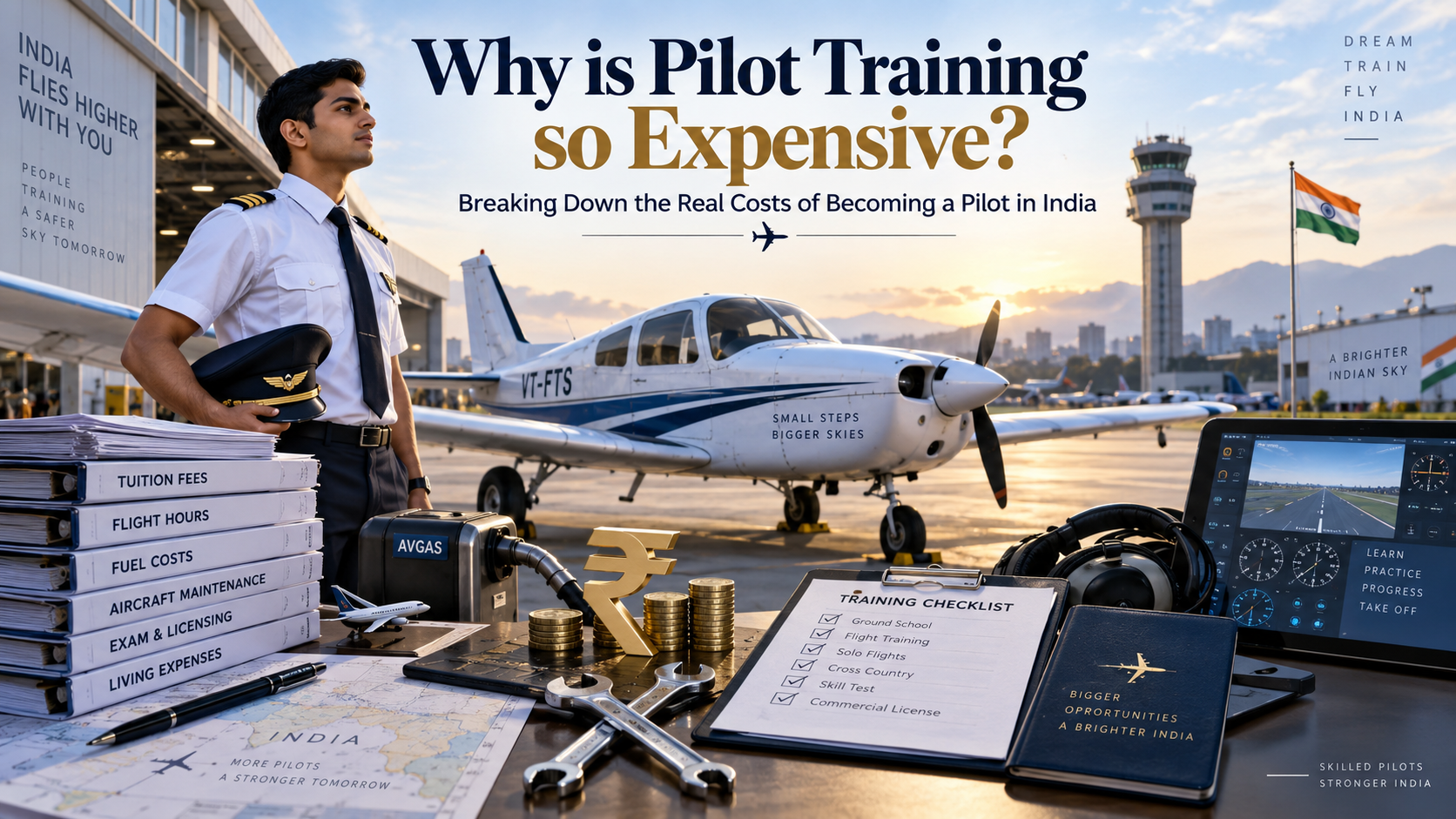
Becoming a pilot is one of the most ambitious career goals for many Indian students after Class 12. The opportunity to fly aircraft, travel across countries, and build a career in the aviation industry makes pilot training an attractive choice for aspiring aviation professionals.
However, many students and their families find the cost of training significantly higher compared to other professional courses. A pilot training course is expensive because it involves aircraft operations, aviation fuel, experienced flight instructors, simulator sessions, aircraft maintenance, and strict safety procedures, all of which are essential for developing skilled and responsible pilots.
The major expenses include:
| Expense Category | Approximate Contribution |
| Aircraft flying hours | Highest cost component |
| Aviation fuel | Major operational expense |
| Flight instructor fees | Required for every training flight |
| Aircraft maintenance | Ensures safety and airworthiness |
| Simulator training | Improves pilot skills in controlled environments |
| Ground school training | Aviation theory and DGCA exam preparation |
| Medical, exams and licensing fees | Regulatory requirements |
Unlike classroom-based courses, pilot training requires students to learn and practise in an actual aviation environment where every flying hour has operational costs.
In India, the total cost of obtaining a DGCA Commercial Pilot Licence (CPL) generally ranges between ₹55 lakh to ₹64 lakh or more, depending on the flying school, aircraft type, location, training duration, weather conditions, and individual student progress.
Understanding where this money goes helps students make better decisions when selecting a flying school.
Understanding the Real Cost of Pilot Training in India
Many students searching for pilot training fees in India come across different cost estimates online, which can make it difficult to understand the actual investment required to become a pilot.
The variation in fees happens because different flying schools include different training components in their packages. Some institutes may mention only the aircraft flying cost, while others provide a more comprehensive package that includes multiple aspects of pilot training.
A complete commercial pilot training program may include:
- Aircraft flying hours
- Ground school training
- DGCA examination preparation
- Simulator training sessions
- Flight instructor charges
- Accommodation and living support
- Uniform and training materials
- Licence documentation and processing assistance
Therefore, students should not choose flying schools only based on the advertised fees. It is important to understand what services and facilities are included, the quality of training provided, aircraft availability, and the overall pathway offered to become an airline-ready pilot.
A transparent understanding of the complete cost structure helps students and their families plan their aviation journey better and avoid unexpected expenses during training.
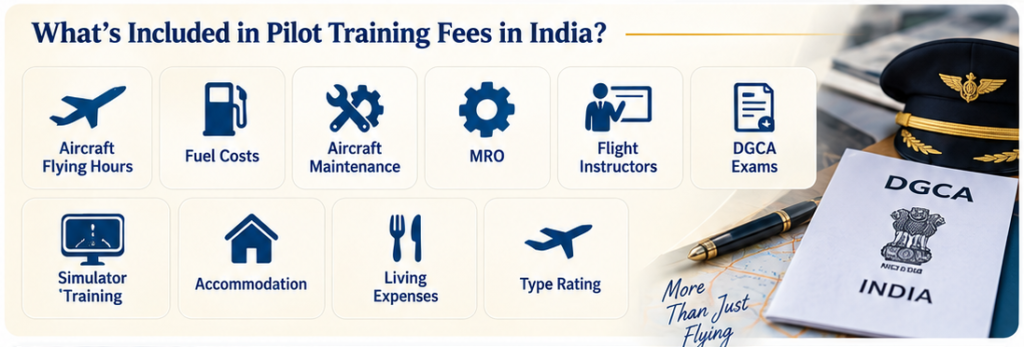
The pilot course fee is divided across several essential components, as discussed below:
- Aircraft Flying Hours: The Biggest Expense in Pilot Training
The largest part of CPL training cost comes from aircraft flying hours.
According to DGCA requirements, a Commercial Pilot Licence applicant must complete the required flying experience, including approximately 200 hours of flight time along with other mandatory requirements.
Every flight hour involves multiple expenses:
- Aircraft usage
- Fuel consumption
- Instructor time
- Maintenance checks
- Airport operational charges
A training aircraft itself is a highly specialised machine requiring regular inspections and maintenance.
For example, a single-engine training aircraft used by student pilots may cost thousands of rupees per flying hour because operating an aircraft involves much more than simply taking off and landing.
- Aviation Fuel Makes Flight Training Expensive
Fuel is one of the highest operating costs for any aircraft.
Unlike cars, aircraft consume specialised aviation fuel such as:
- Aviation Turbine Fuel (ATF) for turbine aircraft
- Aviation gasoline (AVGAS) for many piston training aircraft
Fuel prices directly impact flight training costs.
A flying school must maintain enough fuel availability so students can complete their scheduled flying hours without interruption.
- Aircraft Maintenance and Safety Standards
Safety is the highest priority in aviation. Every training aircraft must undergo regular maintenance and inspections through approved Maintenance, Repair, and Overhaul (MRO) facilities to ensure airworthiness and safe operations.
These maintenance requirements increase operational costs but are essential for producing skilled and safety-focused pilots.
- Professional Flight Instructors
A pilot is not trained only through books. Students learn directly from experienced flight instructors who guide them through practical flying skills, including:
- Aircraft handling
- Take-off and landing techniques
- Emergency procedures
- Navigation
- Decision-making
- Aviation discipline
Flight instructors play a critical role in developing safe, confident, and skilled pilots. Their expertise, flying experience, and continuous guidance are an essential part of the overall pilot training investment.
- Simulator Training and Advanced Learning Tools
Modern pilot training includes simulator sessions to help students practise situations that cannot always be safely created in real flights.
Simulator training helps students understand:
- Aircraft systems
- Emergency situations
- Instrument procedures
- Weather-related challenges
- Cockpit operations
These sessions improve pilot confidence before handling similar situations in an actual aircraft.
Complete Breakdown of Commercial Pilot Licence (CPL) Training Expenses in India
The exact cost of CPL training varies between flying schools depending on aircraft fleet, flying hours, location, infrastructure, and services included in the training package. At reputed flying institutes, such as Vision Flying Training Institute, the overall CPL training cost generally ranges from ₹55 lakh to ₹64 lakh.
| Training Component | Estimated Cost Range |
| Aircraft flying hours | ₹40 lakh – ₹50 lakh |
| Ground school training | ₹2 lakh – ₹5 lakh |
| Flight instructor charges | Included in flying training cost |
| Simulator training | ₹1 lakh – ₹3 lakh |
| DGCA examination preparation, exams & licence support | ₹50,000 – ₹1.5 lakh |
| Medical examination & documentation | ₹15,000 – ₹50,000 |
| Uniform, books & training materials | ₹50,000 – ₹1 lakh |
| Accommodation & living expenses during training | Depends on location and duration |
| Total CPL Training Investment | ₹55 lakh – ₹64 lakh (approx.) |
Note: These figures are approximate and may vary depending on the institute, aircraft availability, and training speed.
How much does it Cost to Become an Airline Pilot in India?
Many students calculate only the cost of obtaining a Commercial Pilot Licence (CPL). However, becoming an airline-ready pilot involves additional training and expenses after CPL completion.
At one of the top flying institutes in India, such as Vision Flying Training Institute (VFTI), the CPL training investment generally ranges between ₹55 lakh and ₹64 lakh. The total cost depends on factors such as training requirements, flying hours, and associated expenses.
After completing CPL, many aspiring airline pilots also undergo aircraft type rating training, which is required to operate specific commercial aircraft such as Airbus or Boeing aircraft.
A type rating program can cost approximately ₹20 lakh to ₹25 lakh or more, including expenses such as:
- Type rating course fees
- Simulation training for pilots
- Accommodation
- Living expenses during training
- Other related costs
Considering CPL training, type rating, accommodation, and additional career preparation expenses, the total investment to become an airline-ready pilot can approach ₹90 lakh.
| Training Stage | Approximate Cost |
| CPL Training in India | ₹55 lakh – ₹64 lakh |
| Type Rating Training | ₹20 lakh – ₹25 lakh |
| Accommodation & Living Expenses | Additional cost depending on location |
| Estimated Total Investment | ₹90 lakh approx |
Is Pilot Training Cost in India Different for CPL and PPL?
Yes, the cost of pilot training differs significantly between a Private Pilot Licence (PPL) and a Commercial Pilot Licence (CPL).
The reason is that both pilot licences have different purposes and training requirements.
Private Pilot Licence (PPL)
A PPL allows individuals to fly aircraft for personal and recreational purposes. It does not allow pilots to work for airlines commercially.
PPL training generally requires fewer flying hours compared to CPL training, making it less expensive.
Commercial Pilot Licence (CPL)
A CPL is required for students who want to pursue aviation as a profession and become airline pilots.
CPL training includes:
- More flying hours
- Advanced aviation theory
- DGCA entrance exam
- Professional flight training standards
| Licence Type | Purpose | Approximate Cost |
| PPL | Personal flying and recreational use | ₹15 lakh – ₹25 lakh+ |
| CPL | Professional pilot career | ₹55 lakh – ₹64 lakh+ |
Cost of Pilot Training Abroad
Many Indian students consider completing pilot training abroad because some countries offer favourable weather conditions, lower operational costs, and faster flying schedules.
Popular destinations for international pilot training include:
- United States
- Canada
- Australia
- New Zealand
- South Africa
- Philippines
| Country | Approximate CPL Training Cost |
| India | ₹55 lakh – ₹60 lakh+ |
| USA | ₹40 lakh – ₹70 lakh+ |
| South Africa | ₹35 lakh – ₹55 lakh+ |
| Philippines | ₹30 lakh – ₹50 lakh+ |
| Australia | ₹50 lakh – ₹80 lakh+ |
Although some countries may appear cheaper initially, students should also consider:
- DGCA licence conversion requirements
- Travel and accommodation expenses
- Visa costs
- Local living expenses
- Additional training requirements after returning to India
A lower training fee does not always mean a lower overall investment.
Which Country is the Cheapest to Learn to Become a Pilot?
The cheapest country for pilot training depends on multiple factors, including exchange rates, living expenses, aircraft availability, and training efficiency.
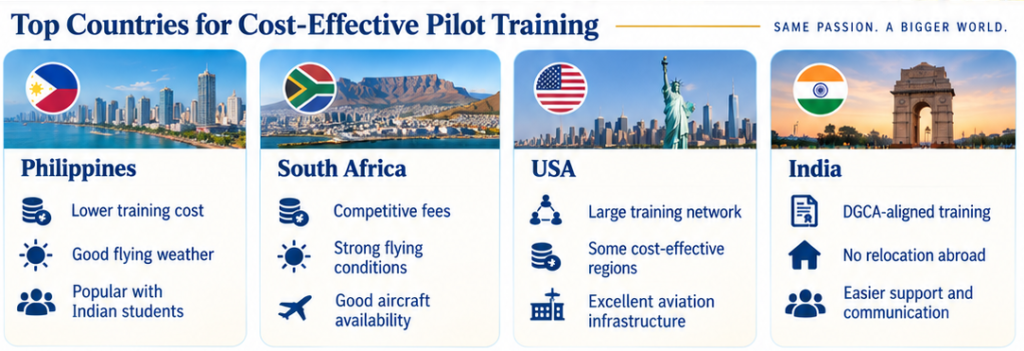
Countries such as the Philippines, South Africa, and some regions of the USA are often considered cost-effective destinations because they offer:
- Good flying weather
- Lower operating costs
- Availability of training aircraft
However, Indian students must carefully evaluate whether the foreign licence conversion process aligns with DGCA requirements.
A slightly higher training cost in India may provide advantages such as:
- Training according to Indian aviation regulations
- Easier communication and support
- Familiarity with DGCA examination requirements
- No international relocation expenses
Which Country is Best for Pilot Training with Low Fees?
There is no single “best” country for pilot training. The right choice depends on budget, career goals, training quality, and future airline plans.
United States
Advantages:
- Large number of flight schools
- Good aviation infrastructure
- Flexible training environment
Considerations:
- Licence conversion requirements for India
- Additional expenses for accommodation and travel
South Africa
Advantages:
- Good flying conditions
- Competitive training costs
- Popular among international students
Considerations:
- Students must ensure DGCA compliance
Philippines
Advantages:
- Lower training costs
- English-speaking environment
- Popular among Asian students
Considerations:
- Quality varies between training organisations
India
Advantages:
- DGCA-aligned training
- No foreign licence conversion process
- Easier family support
- Training within the Indian aviation ecosystem
Cheapest Pilot Training in India With Fees
Students often search for the cheapest pilot training institute in India, but selecting a flying school only based on fees can create problems later.
The actual cost depends on:
- Number of flying hours required
- Aircraft availability
- Instructor availability
- Training duration
- Additional charges
Approximate CPL training fees in India:
| Training Option | Estimated Cost |
| Basic CPL training packages | ₹45 lakh – ₹55 lakh |
| Established flying institutes in India | ₹50 lakh – ₹65 lakh |
| CPL + additional career preparation | ₹70 lakh+ |
The cheapest option may not always be the most cost-effective choice, as delays can increase the overall training duration and result in additional expenses.
Hidden Costs Students Should Consider Before Starting Pilot Training
Many students focus only on CPL fees and forget additional expenses involved in becoming an airline-ready pilot.
Some additional costs may include:
- DGCA Medical Examination
Before beginning professional pilot training, candidates must complete DGCA medical tests.
These include:
- Class 2 Medical Examination
- Class 1 Medical Examination
- DGCA Examination Preparation
Students must clear DGCA theoretical examinations as part of the CPL training process. These examinations assess their knowledge of essential aviation subjects for pilot training in India.
- Accommodation and Living Expenses
Students often relocate to the city where their flying school is located, which adds to the overall cost of pilot training. These expenses may include hostel or rental accommodation, food, transportation, and other daily requirements.
The total cost can vary significantly depending on the training location, lifestyle, and duration of the course.
- Additional Flying Hours
Not every student completes training within the minimum required flying hours.
Additional flying may be required because of:
- Weather delays
- Skill improvement requirements
- Aircraft availability
- Training gaps
Extra flying hours increase the overall cost.
Why Does Pilot Training Cost More Than Other Professional Courses?
Pilot training is different from traditional education programs.
A student studying engineering or management mainly uses classrooms, laboratories, and digital resources.
Unlike most career courses, pilot training involves practical aviation operations and specialised resources that significantly increase the overall investment.
The comparison below highlights why pilot training involves a higher investment than traditional courses:
| Traditional Course | Pilot Training |
| Classroom learning | Classroom and aircraft training |
| Books and computers | Aircraft and aviation equipment |
| Laboratory practice | Real flight operations |
| Fixed infrastructure | Aircraft maintenance and operations |
Aviation training is expensive because students are learning a profession where mistakes can have serious consequences. Therefore, training standards are designed around safety and practical competence.
Is Pilot Training Worth the Investment?
Pilot training is a significant financial commitment, but aviation continues to offer rewarding career opportunities for skilled and qualified pilots. The salary of a pilot is one of the aspects that attracts many aspiring aviation professionals to this career path.
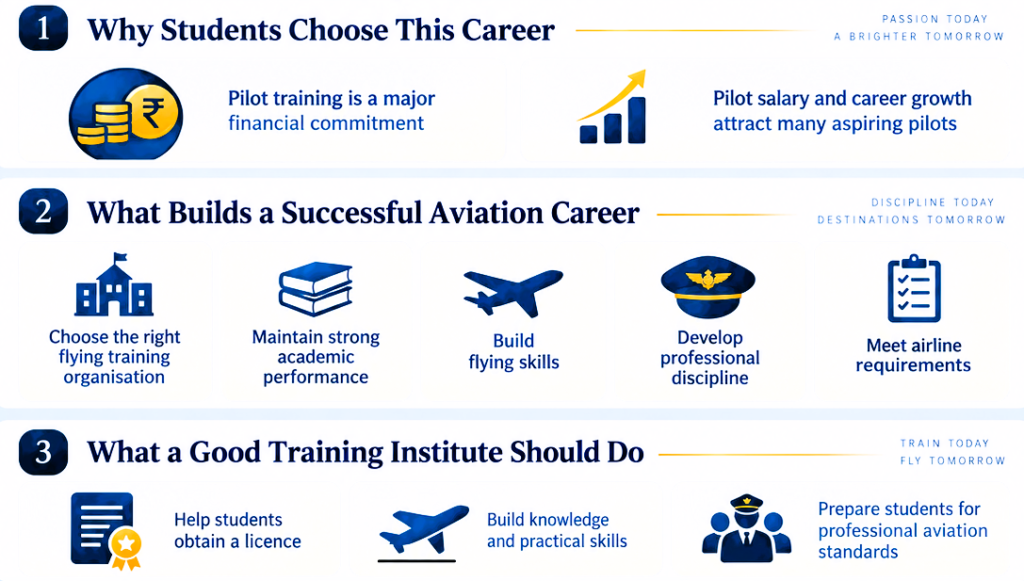
A successful aviation career depends on:
- Choosing the right flying training organisation
- Maintaining strong academic performance
- Building flying skills
- Developing professional discipline
- Meeting airline requirements
A good training institute not only helps students obtain a licence; it prepares them with the knowledge, skills, and professional standards required to succeed in the aviation industry.
How Choosing the Right Flying School Can Reduce Training Costs
The cheapest flying school is not always the most affordable option. A school with limited aircraft availability, training delays, or poor scheduling can increase the overall duration and cost of pilot training.
Students should consider the following points before selecting a flying institute:
- Aircraft Availability: A sufficient number of aircraft helps students complete their flying hours on time and avoid unnecessary delays.
- Experienced Instructors: Skilled instructors help students learn effectively and progress smoothly throughout their training.
- Training Infrastructure: Access to proper classrooms, simulators, and maintenance facilities supports better learning and efficient training.
- Transparent Fee Structure: Understanding what is included in the fees and knowing about additional expenses helps students plan their investment better.
Why Choose Vision Flying Training Institute (VFTI) for Pilot Training?
Vision Flying Training Institute focuses on providing aspiring pilots with structured aviation training designed around safety, skill development, and professional growth.
At VFTI, students receive support throughout their pilot training journey, including flight training, ground school preparation, aviation knowledge development, and guidance to help them understand the requirements of a professional pilot career.
Choosing the right institute is one of the most important decisions in a pilot’s career journey. A well-planned training approach helps students develop the confidence and skills required to enter the aviation industry.
Conclusion
Pilot training is expensive because aviation demands the highest levels of safety, technical knowledge, and practical skill.
Every flying hour, instructor session, aircraft inspection, and training requirement contributes to creating a competent professional pilot.
Aspiring pilots in India should focus not only on finding the lowest-cost training option but also on choosing a reliable flying institute that provides quality education, proper guidance, and a strong foundation for a successful aviation career.
Connect with our admission consultants today to learn more about CPL training, eligibility requirements, and the admission process.
Call: +91 9319193602, +91 9319193605
Email: enquiry@vfti.in
Vision Flying Training Institute (VFTI) helps aspiring pilots take their first step towards building a successful aviation career.
Frequently Asked Questions (FAQs)
- Why is pilot training so expensive in India?
Pilot training is expensive because it involves aircraft operations, fuel, maintenance, instructors, simulator training, and strict aviation safety requirements.
- How much does it cost to become a pilot in India?
The cost of becoming a commercial pilot in India usually ranges from approximately ₹55 lakh to ₹60 lakh or more, depending on the flying school and training requirements.
- Can I become a pilot after Class 12?
Yes. Students who have completed Class 12 with Physics and Mathematics can pursue pilot training after meeting DGCA eligibility requirements.
- What is included in CPL training fees?
CPL training fees generally include flight training, ground classes, instructor charges, aircraft usage, and other training-related expenses.
- Is pilot training a good career option in India?
Pilot training can be a rewarding career choice for students who are passionate about aviation, committed to learning, and willing to maintain professional standards.
- How can I reduce pilot training costs?
Students can reduce costs by choosing a reputed flying school with good aircraft availability, completing training efficiently, and understanding all fees before joining.