
Becoming a pilot is a rewarding ambition, but it demands a serious financial commitment. For new students, the choice typically comes down to two approaches: enrolling at a structured flight school or pursuing a more self-directed, independently funded path. Understanding the differences- in cost, structure, flexibility and long-term outcomes, helps beginners make a decision that fits their budget and goals.
Training costs vary depending on location, aircraft type, instructor fees, licence requirements and the pace of training. Additional expenses such as examinations, study materials, equipment and transport can add considerably to the overall figure.
For local students, comparing nearby flight schools and independent options across convenience, aircraft availability, instructor support, flexibility and structure is an important early step.
Flight Schools and the Self-Funding Model
A flight school typically provides a coordinated training environment covering ground instruction, flight lessons, instructor support, scheduling and the licensing process. This structured approach is particularly valuable for students who have never flown before.
Self-funded training works differently. Rather than routing the entire programme through one institution, students pay for individual elements of training from personal savings or other legitimate sources as funds allow. This may involve arranging separate instructors, aircraft rental, examination fees and other training costs independently.
The more meaningful comparison is not simply “school or no school” – many students enrolled at flight schools are also self-funding their tuition. The real distinction is between structured flight school training and independently managed, pay-as-you-go flying.
What Makes Flight School Structure Important

Starting flight training involves navigating licences, medical requirements, theoretical examinations and practical skills. A well-organised flight school consolidates many of these elements into a single, coherent pathway.
Structured Training and Professional Guidance
A structured syllabus guides students from foundational skills through progressively demanding exercises. Instructors can monitor performance, identify weak areas and adjust training accordingly. For beginners, this continuity is reassuring, each step builds on the last rather than being planned independently.
Access to Aircraft and Instructors
Flight schools maintain access to aircraft and instructors, which can simplify scheduling. However, the quality of that access varies considerably between schools. Before committing, students should ask about aircraft availability, maintenance procedures, instructor continuity and cancellation policies.
Career-Oriented Progression
Students targeting commercial aviation careers benefit from a training environment structured across multiple phases. A private pilot licence may be followed by additional ratings and certifications depending on career goals and applicable regulations. A clearly defined progression means each qualification builds toward a professional outcome rather than being treated as a standalone achievement.
Potential Drawbacks of Flight Schools
A structured environment is helpful, but not every flight school delivers value commensurate with its cost. Students should evaluate the total cost rather than any advertised package price. Before enrolling in any school, reading a dedicated guide on how to evaluate and choose the right FTO can help you ask the right questions and avoid common enrolment mistakes.
Some potential disadvantages include:
- Higher initial financial commitment
- Extra flight hour charges above package estimates
- Limited choice of instructors or aircraft
- Training schedules that may conflict with work or study commitments
- Add-on fees for administration or examinations not included in headline prices
- Travel and accommodation costs where applicable
The essential question is: what does the quoted price actually cover?
The Added Flexibility of Self-Funding

Self-funded training attracts students who prefer to invest incrementally. Those who cannot assemble a large sum upfront may prefer to set aside funds over time and pay for lessons progressively.
Pay-As-You-Go Training
Purchasing lessons individually gives students greater control over cash flow. It also accommodates those balancing flight training with full-time work or university study.
Flexibility, however, comes with a caveat. Training gaps reduce skill retention and can require students to repeat exercises, reducing the efficiency of each logged hour. Disrupted progress increases both the time and cost needed to reach a standard.
Greater Control Over Spending
Self-funded students develop a detailed awareness of every expense. Aircraft rental, instructor fees, examination fees, study materials and licensing charges all become individually managed line items. This granular approach offers transparency and genuine insight into where the money goes.
What Does Becoming a Pilot Actually Cost?
The headline price of any flight training package rarely reflects the full expenditure. Total spending depends on the specific licence being pursued and how quickly the student progresses. A thorough breakdown of pilot course fees and what training truly costs in India is essential reading before committing to any programme.
Typical expense categories include:
- Aircraft rental
- Flight instructor fees
- Ground school
- Written and theoretical examinations
- Practical flight tests
- Medical certification
- Licensing and administrative charges
- Aviation textbooks and study resources
- Headset and personal equipment
- Transport to the airport
- Accommodation where required
Additional flight hours deserve particular attention. Students do not all progress at the same rate, and budgeting only for the minimum advertised hours rarely reflects what training actually costs in practice.
Comparing Flight Schools With Self-Funding
A meaningful comparison considers far more than the opening price.
Flight schools typically offer more structure, administrative support and access to established training resources. Self-funded arrangements allow greater spending control and timetabling flexibility but require significantly more personal organisation and planning.
Geography also matters for local students. A provider that is slightly more expensive but substantially closer may save recurring transport costs and make consistent lesson frequency more achievable.
| Factor | Flight School | Self-Funding |
|---|---|---|
| Structure | Usually high | Depends on arrangement |
| Scheduling | School-dependent | Potentially flexible |
| Financial control | Moderate | Often greater |
| Instructor selection | May be limited | Potentially broader |
| Administrative support | Usually available | Student’s responsibility |
| Initial planning | Relatively straightforward | Requires more research |
| Career pathway | Often clearly defined | Must be planned carefully |
The most economical choice is not always the lowest advertised hourly rate. Consistency, aircraft availability, instructor quality and training structure all influence the final cost.
Local Options for Flight Training
Location has a direct effect on training costs and consistency. Frequent travel to a distant school adds expense and makes maintaining a regular lesson schedule more difficult.
Prospective students should research organisations operating locally and verify the standards applied by the relevant aviation authority. Rather than relying on marketing material, comparing DGCA-approved flying institutes in India gives a clearer picture of which schools meet verified regulatory standards.
Useful questions to ask any local provider:
- What licences and ratings does the school offer?
- Which aircraft are available for training?
- How many active instructors are currently assigned?
- How are maintenance issues handled and how quickly?
- What is the policy when a lesson is cancelled?
- Are extra flight hours charged above the package?
- What fees are included in the quoted price?
- Is a payment plan available?
These questions surface costs that may not appear in an initial consultation.
Creating a Realistic Pilot Training Budget
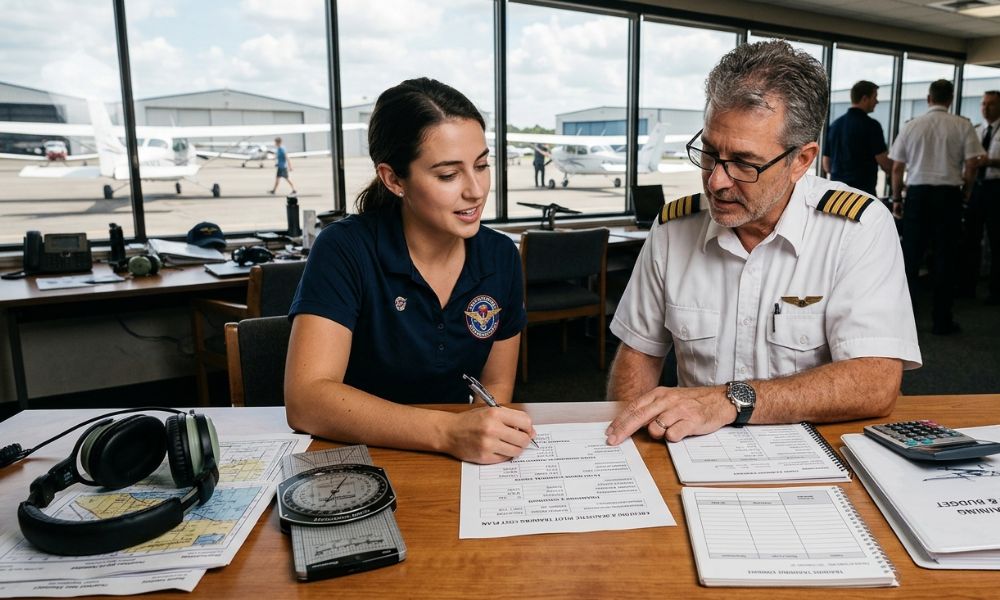
A sound budget accounts for both predictable and variable costs. Start with the published training requirements, then add a realistic allowance for additional hours and incidental expenses.
Maintaining a financial cushion is sensible. Weather, aircraft maintenance, scheduling delays or slower-than-expected progress can all disrupt a training plan. Students who set aside a fixed monthly amount specifically for training develop a more sustainable and reviewable financial structure.
Common Mistakes Beginners Should Avoid
Comparing only the advertised aircraft rental rate is one of the most frequent budgeting errors. A lower hourly rate does not make a school cheaper if the aircraft is frequently unavailable or additional fees are applied elsewhere.
Assuming that the minimum advertised hours apply to every student is another common mistake. Training progress is individual, and most students exceed the minimum before reaching licence standard.
Before making any payment, read the full terms carefully. Refund conditions, aircraft availability guarantees, instructor charges, cancellation policies and additional fee structures all deserve close attention.
Final Thoughts
There is no universally correct answer in the flight school versus self-funding comparison. The right choice depends on personal finances, career goals, learning preferences, availability and location.
Flight schools suit students who want a structured, guided route through training. Self-funding suits those who prefer to manage spending incrementally and are prepared to handle more of the administration independently.
For many beginners, a hybrid approach is practical: structured instruction at a credible school, combined with careful financial management and regular comparison of options.
The investment in becoming a pilot; in time, effort and money is significant. Comparing carefully early on avoids unwelcome financial surprises later. Evaluate the full training pipeline: hourly fees, instructor quality, aircraft access, school location and the realistic likelihood of additional hours. A well-researched decision creates a far stronger foundation for the journey ahead.