Choosing a flight school is one of the first major decisions in your pilot career. You may have already compared course fees, watched training videos and spoken to admissions counsellors. But before you pay a registration amount or training instalment, you need to understand what the school is offering beyond its brochure.
The right questions help you assess the complete cost, the training arrangements and what happens if your plans change.
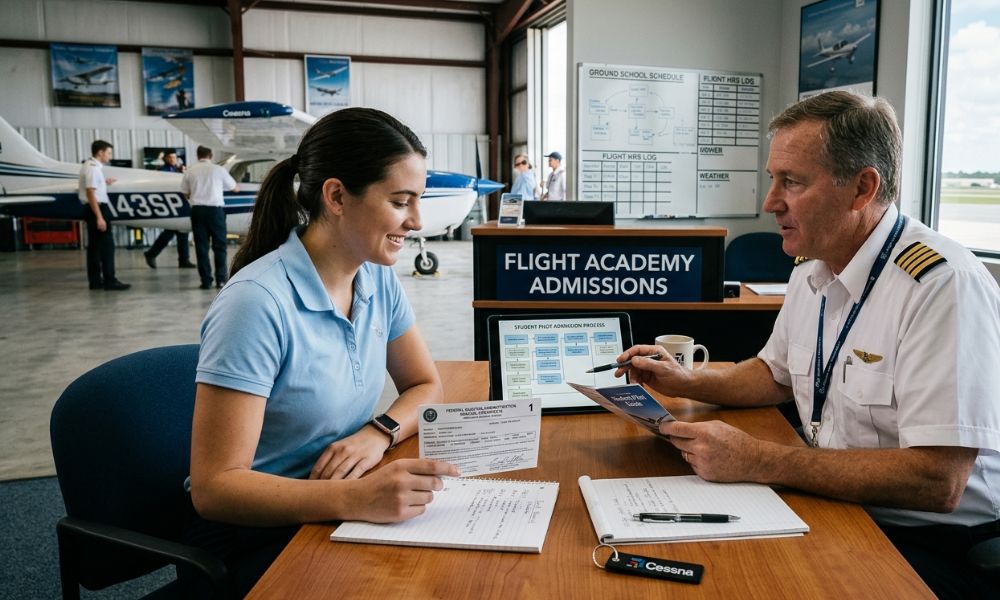
These 15 questions to ask a flight school will help you approach your admission conversation with greater clarity.
- Is the Flying School Approved for the Pilot Training I Need?
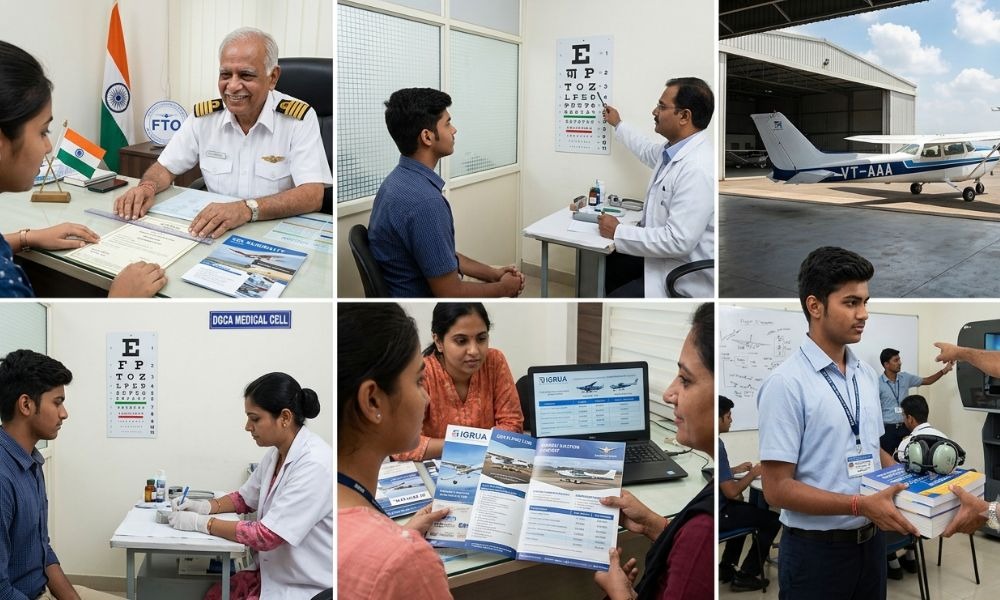
Start by asking for the pilot training institute’s current Directorate General of Civil Aviation (DGCA) approval details. Check the organisation’s legal name, the training it is authorised to provide and the base where you will actually fly.
Verify the information through the official DGCA portal. If you are speaking to a ground school or admissions partner, establish which Flying Training Organisation (FTO) will conduct your flight training.
Check out our guide on how to choose the right FTO for pilot training.
You should know who is responsible for each part of your pilot course before signing an agreement.
- Have My Academic and Medical Requirements Been Checked?
Ask the admissions team to review your educational documents and explain any requirements you still need to complete. A school’s admission conditions and the requirements for licence issuance are separate checks.
Discuss the appropriate DGCA medical assessment process early, particularly before committing a substantial non-refundable amount.
Individual medical eligibility must be assessed through the authorised aviation medical process. An admissions assurance cannot replace that assessment.
- What Exactly Is Included in the Pilot Course Fee?
A quotation becomes useful when you can see what you are buying. Ask whether the programme covers ground school, flight training, simulator sessions and the particular ratings you intend to obtain.
Ask for an Itemised Pilot Training Breakdown
The proposal should identify:
- Aircraft flying hours and simulator hours separately.
- Single-engine and multi-engine training included.
- Instructor charges and flight briefings.
- Ground classes, learning materials and revision support.
- Skill tests, examiner charges and administrative assistance.
Also clarify whether an aircraft-specific type rating is included or would be a separate stage. Avoid treating the phrase “complete pilot training” as a precise description of the package.
- Which Expenses Will I Pay Separately?
Once the inclusions are clear, ask for the exclusions. Examination fees, medical appointments, accommodation, equipment, travel and licence-related expenses can sit outside the advertised training price.
Request the rates for additional flying, repeat checks and refresher training. Establish whether fuel, landing charges and applicable taxes are included and whether any rates can change during your course.
Your comparison should reflect the expected cost of completing pilot training, including foreseeable extras.
- How Are the Payments Linked to My Pilot Training?
Find out how much is payable at admission, when later instalments fall due and what each payment covers.
A useful follow-up is whether payments follow calendar dates or completed training stages. If flying is delayed, will the next instalment still become due?
Ask how your account will show money paid, training delivered and the remaining balance. Before transferring funds, confirm the payment beneficiary against the agreement and obtain an official receipt.
- What Happens If I Withdraw or Need to Pause Pilot Training?
Read the refund and withdrawal terms before paying a deposit. Do not assume that money described as “adjustable against pilot course fees” is also refundable.
Check the Situations Covered by the Policy.
Look for clear terms addressing:
- Withdrawal before training begins.
- Medical delays or an inability to continue.
- Personal leave or financial difficulties.
- Unused flying hours and prepaid services.
- Deductions and the refund-processing timeline.
If an explanation given during counselling differs from the agreement, resolve the difference before signing.
- How Many Training Aircraft Are Available at My Base?
A fleet photograph does not tell you how many aircraft will be available to your batch.
Ask how many aircraft are currently serviceable at your assigned base, which models you will train on and how many students share them. Keep aircraft planned for future delivery separate from those already operating.
Also ask how maintenance downtime affects scheduling. The practical concern is whether the school’s available capacity supports the number of students it accepts.
- Who Will Train Me, and How Is My Progress Reviewed?
Your instructor will influence how you learn, respond to mistakes and develop flying judgement. Ask about instructor qualifications, availability and the number of active students assigned to each instructor.
Find out whether you will normally work with a consistent instructor and how handovers are managed when someone changes.
Regular briefings and progress reviews should help you understand what you have achieved, what needs improvement and what you must demonstrate before moving to the next stage.
- How Often Are Students Actually Flying?
Ask about the flying activity of students at a similar training stage over recent months. A school-wide average can hide differences between beginners, advanced students and those waiting for specific training slots.
Discuss how flights are allocated, how cancellations are rescheduled and whether certain stages have longer waiting periods.
This gives you a more useful picture of daily training than a general promise that aircraft are available throughout the year.
- How Long Have Recent Students Taken to Complete Training?
Request recent completion information for the same course and training base. Ask how many students the figures cover and how many from those batches are still training.
Clarify what the advertised duration measures. Does it end with flying completion, the final test or licence issuance?
Weather, aircraft availability, examination progress and individual learning needs can affect the schedule. A realistic estimate should explain these conditions rather than rely on the fastest student’s experience.
- How Does the Flying Training Organisation Handle Safety Concerns?
Ask what happens when a student notices an aircraft defect, feels unwell or is uncomfortable proceeding with a flight.
The discussion should cover defect reporting, maintenance arrangements, emergency procedures and the person students can approach with a concern.
A training schedule should allow a flight to be postponed when necessary. Pressure to complete hours must never become a reason to overlook a safety concern.
- What Ground School and Examination Support Will I Receive?
Flight training involves more than time in the aircraft. You also need a clear plan for theoretical preparation and the associated pilot examination processes.
Ask which subjects are taught, how classes fit around flying and what happens if you need additional revision. Clarify whether mock tests, repeat classes and application guidance carry separate charges.
Check examination procedures through the DGCA Pariksha portal. Understand which tasks the school assists with and which remain your responsibility.
- What Will Accommodation and Daily Living Cost?
If you are relocating, ask about the actual accommodation available to students at your training base. Check the room arrangements, meals, transport, internet access and distance from the airfield.
Request monthly charges, deposits and notice periods in writing. Establish whether accommodation is compulsory and what happens to charges during leave.
Consider the cost of a longer stay as well. A training delay can extend living expenses even when the course fee remains unchanged.
- Can I Visit the Pilot Training Base and Understand How Student Records Are Managed?
A base visit helps you connect the admission discussion with the place where you will train. Where possible, speak to current students at different stages about scheduling, instructor access and communication.
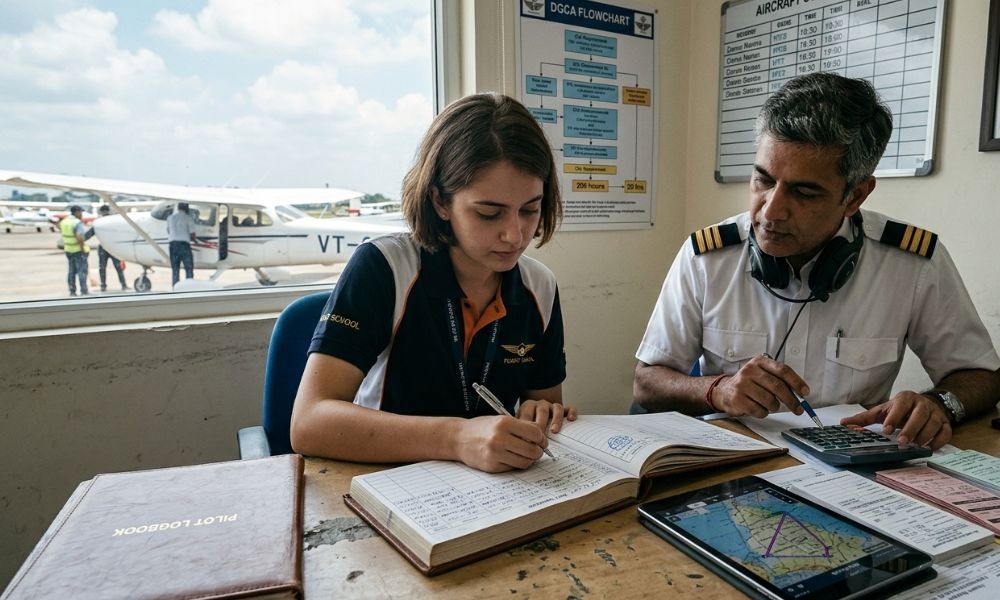
Also ask how you can obtain your training records, flying-hour statements and payment history.
If you later change schools, the new organisation will need to assess your previous training. Establish the record-release procedure and any outstanding-payment conditions before joining.
- What Career Support Is Included After Pilot Training?
Ask the school to explain exactly what “career support” means. It might include interview preparation, technical revision or help presenting your qualifications to employers.
If placement figures are quoted, ask which batch and period they cover, how many students were included and what roles graduates obtained.
Completing a Commercial Pilot Licence (CPL) does not automatically secure airline employment. Treat training, additional qualifications and airline selection as separate stages when planning your career and budget.
Compare Flight School Fees, Payment Plans and Refund Policies Before Enrolling
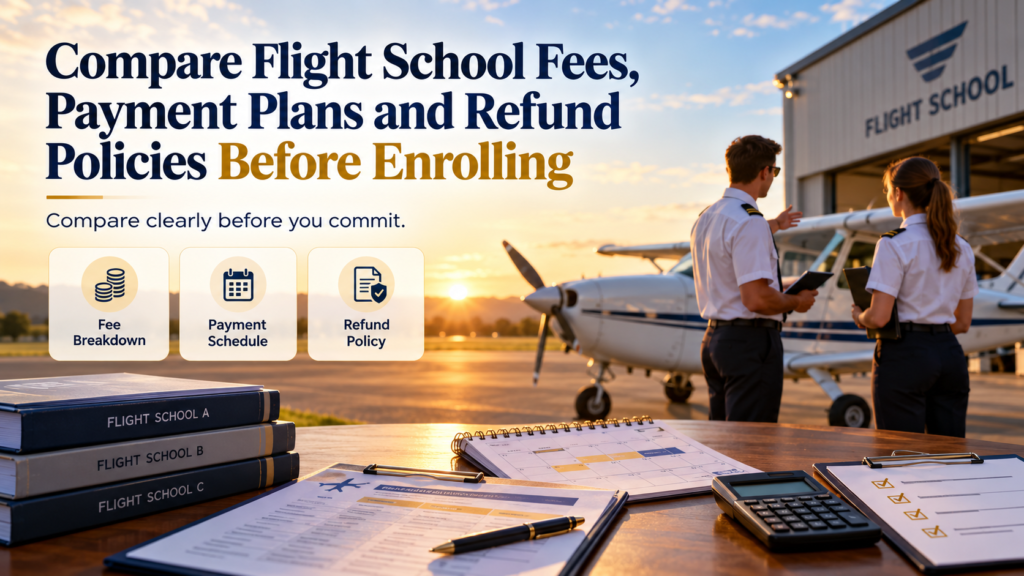
Bring the answers together before making your decision. You should have a written course scope, fee breakdown, payment schedule and refund policy that you understand.
Pay particular attention to unanswered questions. An unclear charge or missing policy needs clarification, even if the rest of the pilot training programme looks suitable. Give yourself time to discuss the proposal with your family and compare equivalent pilot training packages.
Discuss Your Pilot Training Plans with Vision Flying Training Institute
Vision Flying Training Institute offers pilot training programmes, including DGCA ground classes, CPL training and foreign-licence to DGCA conversion. Choosing the relevant programme starts with understanding your present qualifications and the training you need.
Use these questions during your admissions discussion so that the course scope, expected schedule and financial commitment are clear.
Contact VFTI’s admissions team to discuss your eligibility and request a current, itemised training proposal.
Call: +91 9319193602 or +91 9319193605
Email: enquiry@vfti.in.