The idea of flying an aircraft, travelling across the world, and building a respected aviation career motivates many young aspirants to explore pilot training courses in India.
However, one of the first decisions students face is understanding the difference between a Private Pilot Licence (PPL) and a Commercial Pilot Licence (CPL).
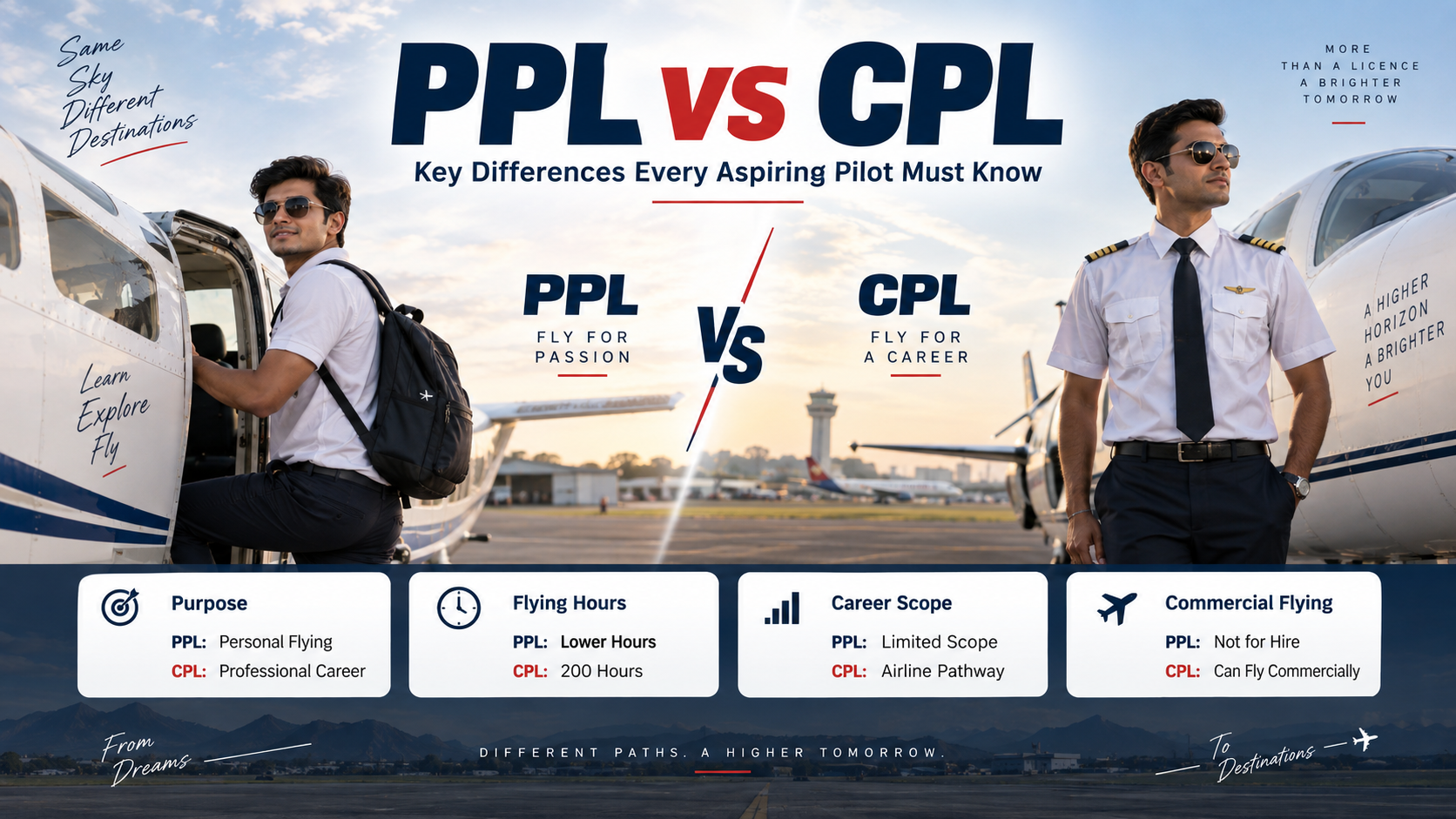
Both licences allow a person to fly an aircraft, but they are designed for completely different purposes.
A Private Pilot Licence (PPL) is meant for individuals who want to fly aircraft for personal use and recreational purposes. On the other hand, a Commercial Pilot Licence (CPL) is the required professional licence for students who want to become airline pilots and build a career through aviation.
Choosing the wrong licence pathway can lead to unnecessary expenses, additional training time, and confusion about your aviation goals.
This guide explains PPL vs CPL, including their differences, eligibility requirements, DGCA regulations, training process, cost, career opportunities, and which licence is the right choice for aspiring pilots.
What is a Pilot Licence?
Before comparing PPL and CPL, it is important to understand what it is.
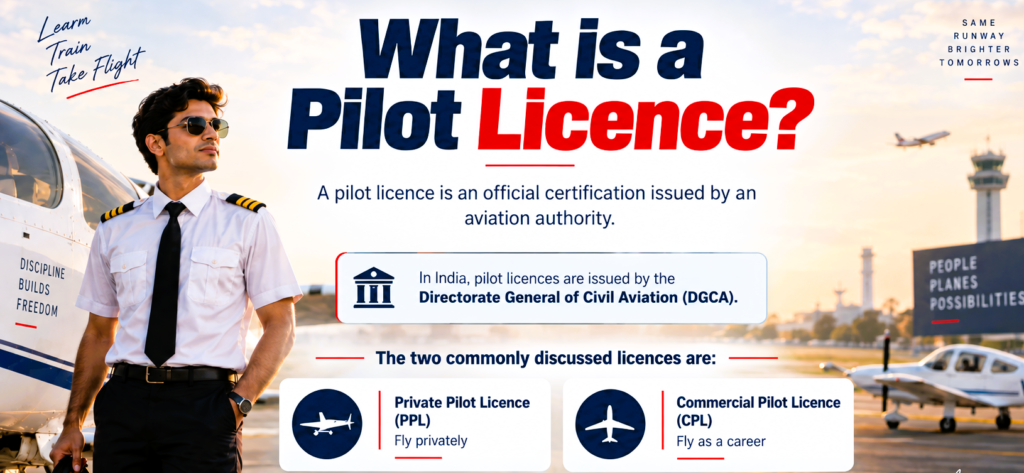
A pilot licence is an official certification issued by an aviation authority that allows an individual to operate an aircraft after completing the required training, examinations, and flight experience.
In India, the Directorate General of Civil Aviation (DGCA) issues pilot licences. The type of licence determines what kind of flying a pilot can perform and whether they can earn money by operating aircraft.
The two commonly discussed licences for aspiring pilots are:
- Private Pilot Licence (PPL)
- Commercial Pilot Licence (CPL)
While a PPL allows individuals to fly privately, a CPL is designed for those who want to pursue aviation as a career.
What is a Private Pilot Licence (PPL)?
A Private Pilot Licence (PPL) is a licence that allows a person to fly an aircraft for personal and non-commercial purposes.
A PPL holder can operate aircraft for recreational flying, personal travel, or aviation experience. However, they cannot work as a paid professional pilot or earn money by flying passengers.
Many aviation enthusiasts choose PPL training because they have a passion for flying, want to experience aircraft operations, or wish to pursue flying as a personal interest.
However, a PPL is not designed for students who want to become airline pilots.
Purpose of a Private Pilot Licence
The main purpose of a PPL is to develop safe and competent private pilots.
A PPL holder can use the licence for:
- Personal flying
- Recreational aviation
- Aircraft ownership operations
- Building initial flying experience
- Aviation experience before advanced training
A PPL allows individuals to enjoy aviation but does not provide a direct professional career pathway.
PPL Eligibility Requirements in India
Candidates interested in obtaining a PPL in India must meet certain eligibility requirements set by DGCA.
| Requirement | Details |
| Minimum Age | 17 years |
| Educational Qualification | Minimum 10th standard or equivalent |
| Medical Requirement | DGCA Class 2 Medical Certificate |
| Aviation Authority | Directorate General of Civil Aviation (DGCA) |
| Training Requirement | Ground training and flight training |
Students should complete their DGCA-approved medical tests before beginning training to ensure they meet aviation health standards.
PPL Training Requirements
PPL training includes both theoretical knowledge and practical flying experience.
Students learn essential aviation concepts such as:
- Aircraft handling skills
- Aviation regulations
- Navigation basics
- Meteorology
- Flight planning
- Aircraft technical knowledge
- Safety procedures
The minimum flying requirement for PPL under DGCA regulations is generally 40 hours of flight time, including required solo and dual flying hours.
What is a Commercial Pilot Licence (CPL)?
A Commercial Pilot Licence (CPL) is a professional pilot licence that allows pilots to fly aircraft commercially and receive payment for their flying services.
Becoming an airline pilot in India requires completing Commercial Pilot Licence (CPL) training, which prepares candidates for professional flying careers with airlines and aviation operators.
A CPL holder can pursue opportunities in:
- Airlines
- Charter aviation
- Corporate aviation
- Cargo operations
- Flight instruction (after meeting additional requirements)
Unlike PPL, CPL training focuses on developing professional-level flying skills required for commercial operations.
Purpose of a Commercial Pilot Licence
The main purpose of CPL training is to prepare pilots for professional aviation careers.
A CPL helps pilots develop:
- Advanced aircraft handling skills
- Professional cockpit discipline
- Decision-making abilities
- Instrument flying skills
- Commercial flight knowledge
- Aviation safety awareness
Airlines expect pilots to have strong technical knowledge, practical flying ability, and professional behaviour. CPL training builds the foundation for these requirements.
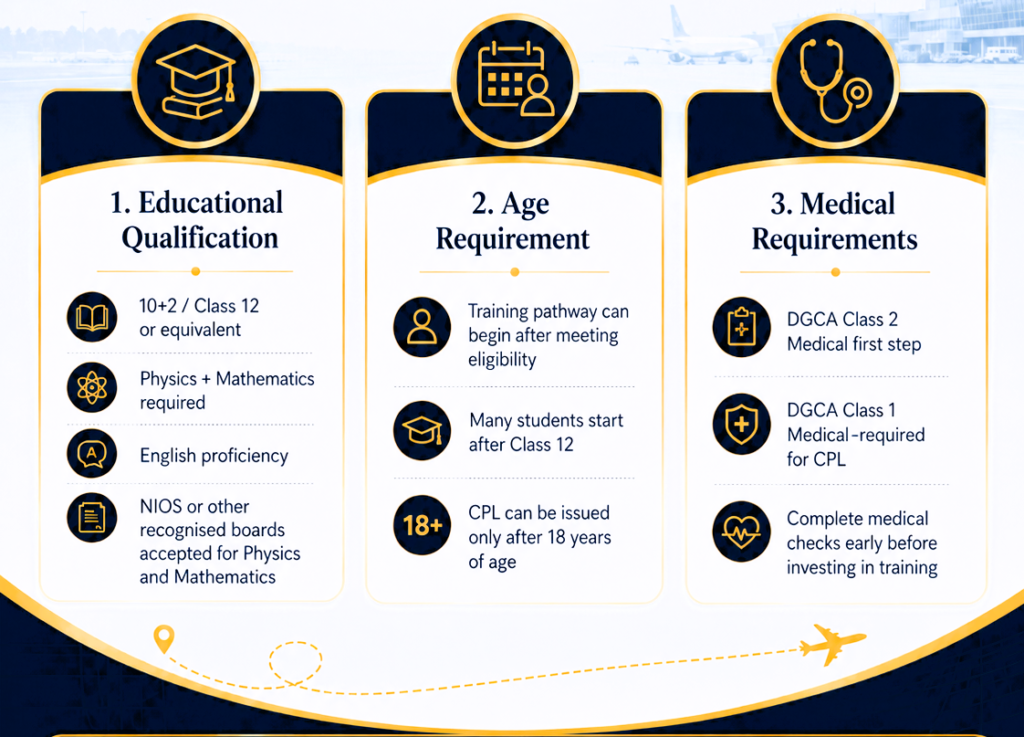
CPL Eligibility Requirements in India
The DGCA has specific requirements for obtaining a Commercial Pilot Licence (CPL) in India.
| Requirement | Details |
| Minimum Age to Obtain CPL | 18 years |
| Educational Qualification | 10+2 with Physics and Mathematics |
| Medical Requirement | DGCA Class 1 Medical Certificate |
| Written Examinations | DGCA examinations |
| Flight Training | Required flying hours as per DGCA regulations |
| Aviation Authority | DGCA India |
Students who have not studied Physics and Mathematics in Class 12 may need to complete these subjects through recognised options before starting CPL training.
CPL Training Requirements in India
CPL training is more advanced compared to PPL because it prepares students for professional aviation operations.
The training includes:
Ground School Training for CPL
Students study:
- Air Navigation
- Air Regulations
- Aviation Meteorology
- Technical General
- Technical Specific
- Radio Telephony procedures
Flight Training for CPL
Students complete practical training involving:
- Solo flying
- Cross-country flying
- Instrument flying
- Night flying
- Advanced aircraft handling
- Flight planning
- Professional operating procedures
Candidates applying for a CPL in India generally require 200 hours of total flight experience as per DGCA requirements.
PPL vs CPL: Complete Comparison Table
| Factor | Private Pilot Licence (PPL) | Commercial Pilot Licence (CPL) |
| Full Form | Private Pilot Licence | Commercial Pilot Licence |
| Main Purpose | Personal flying | Professional flying career |
| Career Opportunity | Limited | Extensive |
| Commercial Flying | Not permitted | Permitted |
| Airline Pilot Career | Not possible | Required pathway |
| Issuing Authority | DGCA India | DGCA India |
| Minimum Age | 17 years | 18 years |
| Education Requirement | 10th standard | 10+2 with Physics and Mathematics |
| Medical Requirement | Class 2 Medical | Class 1 Medical |
| Minimum Flight Experience | Around 40 hours | Around 200 hours |
| Training Level | Basic flying skills | Advanced professional training |
| Cost | Lower | Higher |
| Career Scope | Personal aviation | Airlines, charter, corporate aviation |
Difference Between PPL and CPL Training
Although both Private Pilot Licence (PPL) and Commercial Pilot Licence (CPL) training teach students how to operate an aircraft safely, the purpose, depth of training, and expected outcomes are significantly different.
PPL training focuses on developing the fundamental skills required for private and recreational flying, while CPL training is designed to prepare pilots for the professional standards required in commercial aviation.
The difference is not only in the number of flying hours but also in the level of responsibility, decision-making ability, and operational knowledge expected from the pilot.
| Training Aspect | PPL Training | CPL Training |
| Main Objective | Develop private flying skills | Prepare pilots for professional aviation |
| Training Level | Basic aviation training | Advanced professional training |
| Flying Focus | Personal aircraft operations | Commercial aircraft operations |
| Decision-Making | Basic flight decisions | Complex operational decisions |
| Navigation Training | Basic navigation | Advanced cross-country navigation |
| Instrument Training | Limited | Extensive instrument training |
| Career Preparation | Not designed for employment | Designed for aviation careers |
PPL Training: Building Fundamental Flying Skills
PPL training introduces students to the basic principles of aviation and helps them develop the confidence required to operate an aircraft safely.
The training focuses on understanding aircraft controls, basic flight techniques, and safe flying practices under normal operating conditions.
Key Areas Covered During PPL Training:
- Aircraft Handling Skills: Students learn basic aircraft controls, take-offs, landings, climbs, descents, and flight manoeuvres.
- Flight Procedures: Training covers standard operating procedures, pre-flight checks, and basic aircraft operations.
- Aviation Communication: Students learn radio communication procedures and interaction with air traffic control (ATC).
- Navigation Skills: Training introduces basic flight planning, map reading, and navigation techniques.
- Aviation Safety: Students understand safety procedures, emergency handling basics, and responsible aircraft operation.
The primary goal of PPL training is to develop safe and confident private pilots who can operate aircraft for personal flying purposes.
CPL Training: Developing Professional Pilot Skills
CPL training goes beyond basic aircraft handling and focuses on developing the technical knowledge, decision-making skills, and professional discipline required for commercial aviation.
The training prepares pilots to operate aircraft in more complex environments while following strict aviation regulations and professional standards.
Key Areas Covered During CPL Training:
- Advanced Flight Operations: Students develop advanced flying skills required for professional aircraft operations.
- Instrument Flying: Training includes flying with instruments and understanding procedures used in different weather and operational conditions.
- Cross-Country Flying: Pilots gain experience in planning and conducting longer flights while managing navigation, fuel, and operational factors.
- Commercial Aviation Procedures: Students learn professional operating standards followed in commercial aviation.
- Cockpit Resource Management: Training develops teamwork, communication, and decision-making skills required in professional cockpit environments.
- Emergency Management: Pilots learn how to handle complex situations while maintaining safety and following aviation procedures.
The objective of CPL training is to transform student pilots into aviation professionals who are prepared to meet the expectations of airlines and commercial operators.
PPL vs CPL Training Cost in India
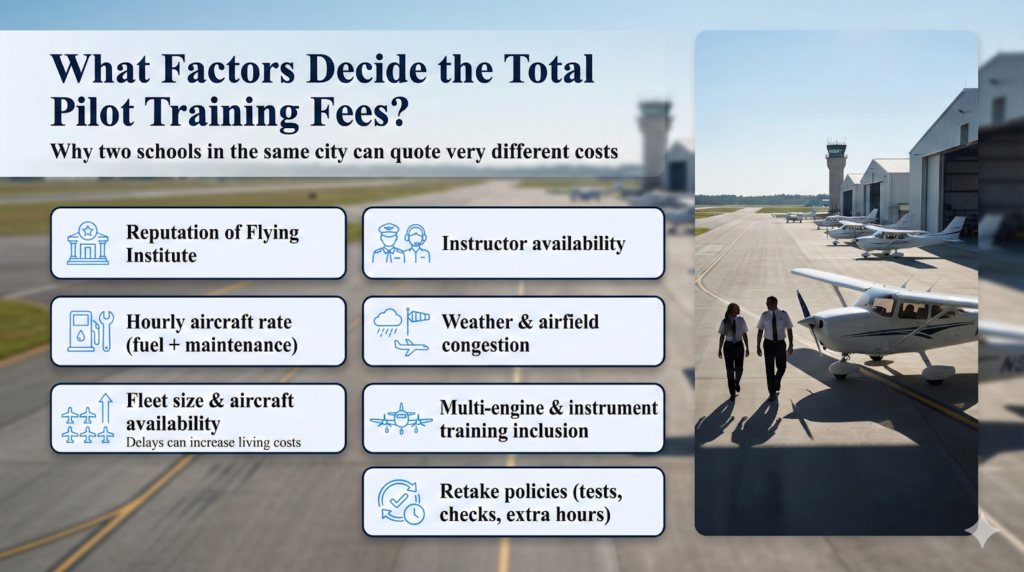
The pilot course fees depend on multiple factors, including:
- Flying school fees
- Aircraft type
- Fuel prices
- Number of flying hours
- Training duration
- Additional examinations and certifications
The approximate training cost difference is:
| Licence | Approximate Cost in India |
| Private Pilot Licence (PPL) | ₹15 lakh – ₹25 lakh |
| Commercial Pilot Licence (CPL) | ₹45 lakh – ₹60 lakh+ |
CPL training costs more because it requires significantly more flying hours, advanced training, and professional preparation.
PPL vs CPL: Difference in Career Opportunities
One of the biggest differences between a Private Pilot Licence (PPL) and a Commercial Pilot Licence (CPL) is the career scope they provide.
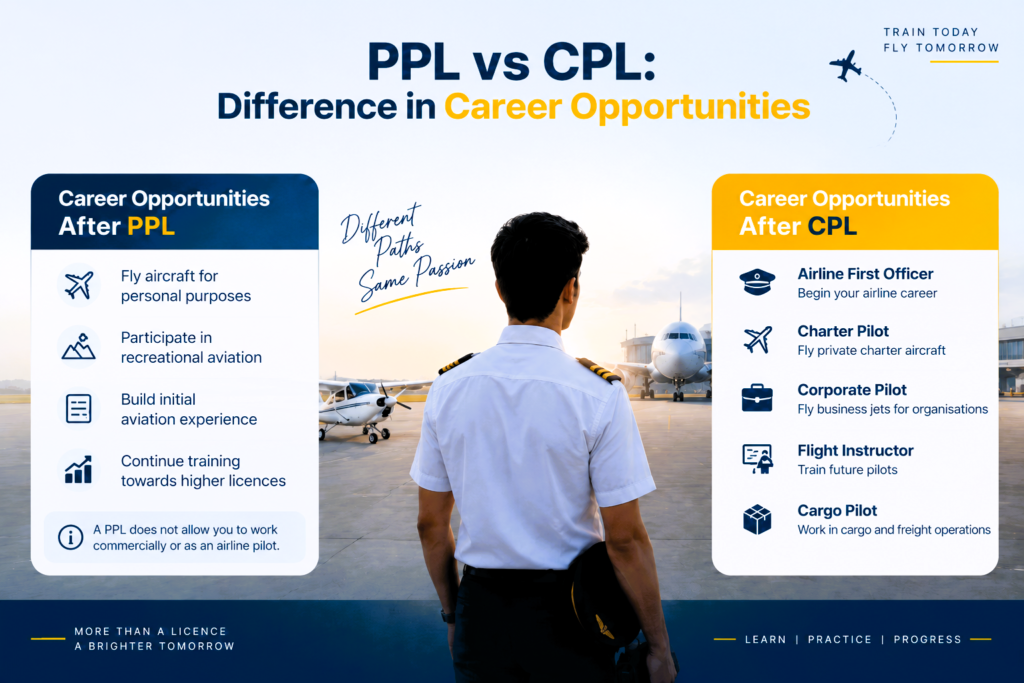
A PPL is mainly designed for personal aviation, while a CPL is designed for individuals who want to build a professional career in the aviation industry.
Career Opportunities After PPL
A PPL provides the opportunity to enjoy flying but does not allow a pilot to work commercially.
PPL holders can:
- Fly aircraft for personal purposes
- Participate in recreational aviation
- Build initial aviation experience
- Continue training towards higher licences
However, a PPL alone does not permit its holder to work as an airline pilot or operate commercial flights.
Career Opportunities After CPL
A CPL opens the pathway towards professional aviation careers.
After completing CPL training in India and fulfilling additional airline requirements, pilots can pursue careers as:
- Airline First Officer: Most commercial pilots begin their airline career as First Officers. They work alongside Captains and gain operational experience.
- Charter Pilot: CPL holders can fly private charter aircraft for individuals, companies, and aviation operators.
- Corporate Pilot: Corporate aviation offers opportunities to fly business jets and private aircraft for organisations.
- Flight Instructor: Pilots can become flight instructors after obtaining the required instructor qualifications and experience.
- Cargo Pilot: Commercial aviation also provides opportunities in cargo and freight operations.
PPL vs CPL: Which Licence is Required to Become an Airline Pilot?
When your goal is to become an airline pilot, CPL is the required licence pathway.
A PPL alone does not allow you to apply for airline pilot positions because airlines require pilots to hold professional qualifications and meet regulatory requirements.
The typical pathway to become an airline pilot in India is:
Class 12 with Physics & Mathematics
↓
DGCA Class 1 Medical Examination
↓
DGCA Ground Examinations
↓
CPL Flight Training
↓
Commercial Pilot Licence (CPL)
↓
Airline Selection Process
↓
Aircraft Type Rating
↓
First Officer
↓
Airline Transport Pilot Licence
↓
Captain
This structured pathway helps students understand that becoming an airline pilot requires more than only obtaining a flying licence.
Is PPL Required Before CPL?
A common question among aviation students is:
“Should I complete PPL before starting CPL training?”
The answer is: No, PPL is not mandatory before CPL.
Students who want to become professional pilots can directly start CPL training after meeting DGCA eligibility requirements.
Starting directly with CPL training is usually the more practical route because:
- It aligns with professional aviation goals
- It avoids unnecessary additional training costs
- It follows the standard airline pilot pathway
However, students who want to experience flying before committing to a professional career may choose PPL first.
Can PPL Hours Count Towards CPL?
Yes, eligible flying hours completed during PPL training may contribute towards CPL requirements, provided they meet DGCA regulations.
However, students should understand that completing PPL does not automatically qualify them for CPL. They must still complete:
- Required total flying hours
- CPL ground examinations
- Advanced flight training
- Medical requirements
A proper training plan from a DGCA-approved flying institute helps students understand how their flying hours can be utilised effectively.
Can a PPL Pilot Become an Airline Pilot?
No, a PPL alone does not allow a pilot to work for an airline.
A PPL holder must complete additional training and requirements to obtain a CPL before applying for professional pilot positions.
The typical pathway for becoming an airline pilot in India is:
Class 12 with Physics & Mathematics → DGCA Medical → CPL Training → Clear DGCA Exams → CPL Licence → Airline Pilot Selection
Can You Convert PPL to CPL?
Yes, a pilot with a PPL can continue training and work towards obtaining a CPL.
However, the pilot must complete:
- Additional flight hours
- Required DGCA examinations
- Advanced flight training
- CPL eligibility requirements
Many students who initially pursue PPL later continue their journey towards commercial aviation.
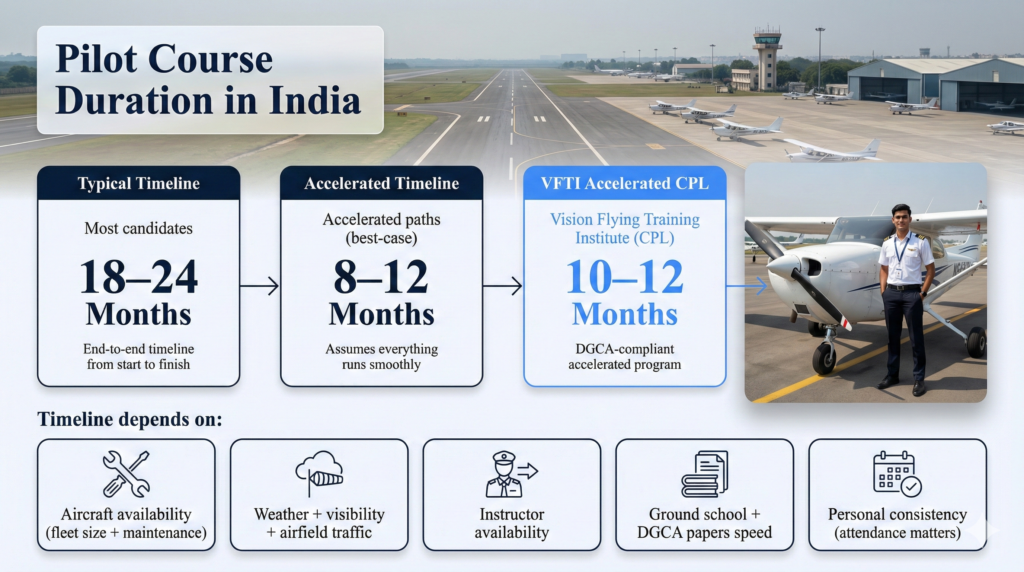
PPL vs CPL Duration: How Long Does Training Take?
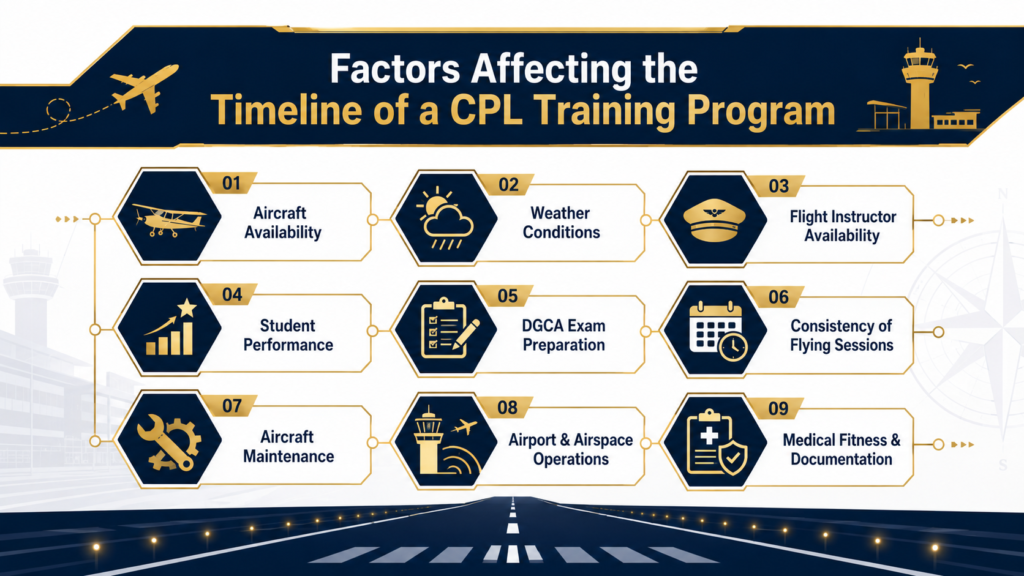
The duration of pilot training depends on:
- Student progress
- Weather conditions
- Aircraft availability
- Training schedule
- Examination completion
Approximate duration:
| Licence | Training Duration |
| PPL | Around 3-12 months |
| CPL | Around 12-24 months |
Students should focus on training quality rather than only completing the licence quickly.
A strong foundation in aviation knowledge and flying skills plays an important role in future career success.
Which Licence Should You Choose After 12th?
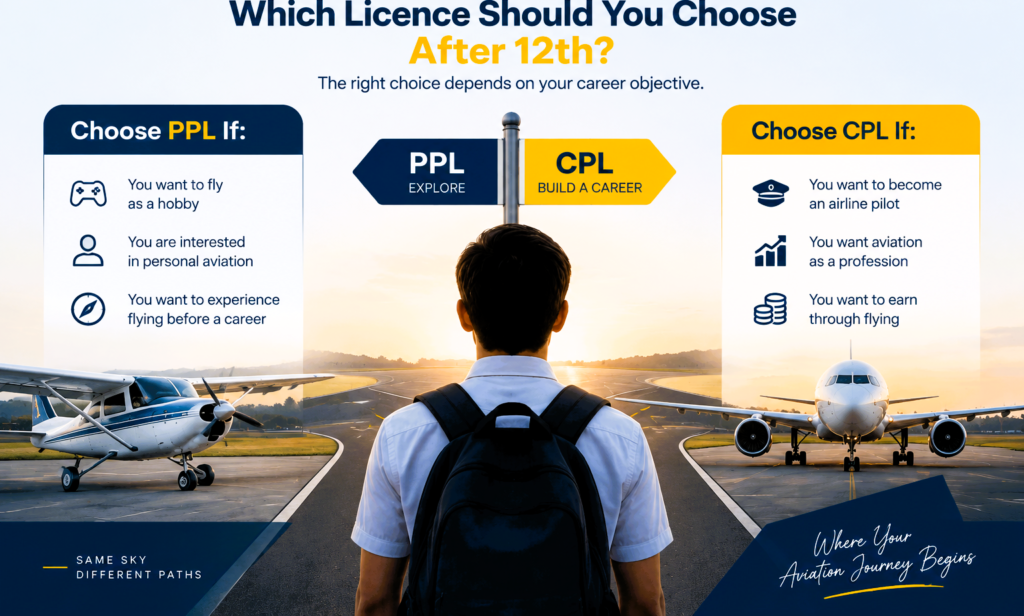
Many students in India start searching for pilot courses after completing Class 12. The right choice depends on your career objective.
Choose PPL If:
You should consider PPL if:
- You want to fly as a hobby
- You are interested in personal aviation
- You want to experience flying before choosing a career path
- You do not plan to work as a professional pilot
Choose CPL If:
CPL is the right choice if:
- You want to become an airline pilot
- You want aviation as a profession
- You want to earn through flying
- You want long-term growth in the aviation industry
- You want to work with airlines or commercial operators
Students planning an airline pilot career in India need to complete CPL training, as it is the primary licence required for professional flying opportunities.
What’s the Hardest Pilot Licence to Get: CPL or PPL?
The difficulty level of a pilot licence depends on the level of training, flying experience, and responsibilities associated with it. Between PPL and CPL, the Commercial Pilot Licence (CPL) is more challenging because it requires a higher level of technical knowledge, greater flying experience, and professional-level skills.
While CPL training is more challenging, it is also the licence that opens the door to professional aviation careers. Students who are committed to becoming airline pilots must be prepared for the additional training, discipline, and dedication required to successfully complete CPL requirements.
The right guidance from a professional flying training institute can make this journey more structured and manageable.
Why Choose Vision Flying Training Institute (VFTI) for Pilot Training in India?
Choosing the right training partner is one of the most important decisions in your aviation journey.
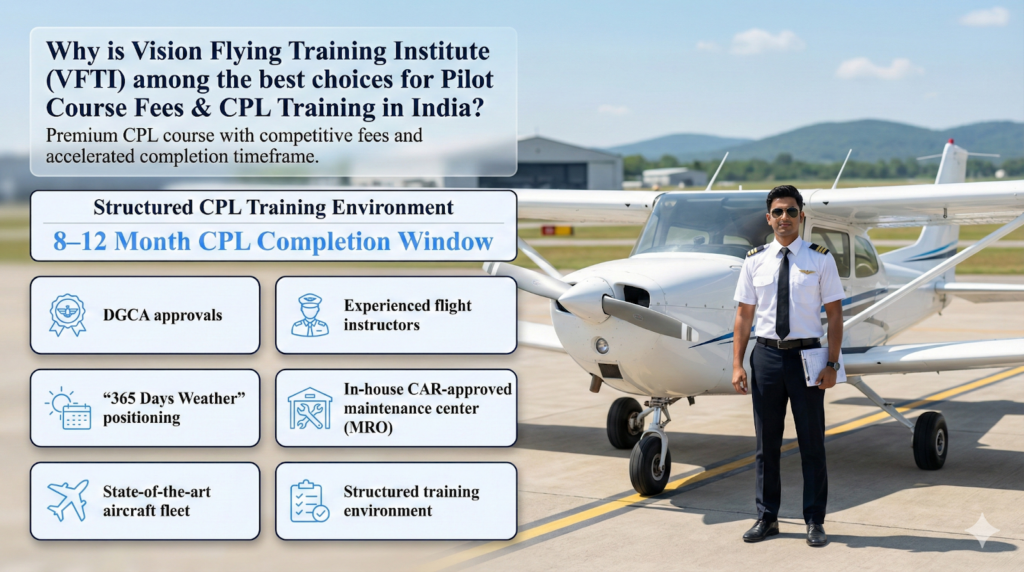
Vision Flying Training Institute (VFTI), among the top flying institutes in India, provides comprehensive pilot training programmes designed to help students begin and progress through their aviation journey. With a focus on practical flight experience, aviation knowledge, and professional development, VFTI supports students in achieving their pilot training goals.
VFTI offers structured training programs, including:
- Commercial Pilot Licence (CPL) Training: A professional pilot training programme designed for students who want to pursue a career in commercial aviation and work towards becoming airline pilots.
- Private Pilot Licence (PPL) Training: A foundational flying programme for aviation enthusiasts who want to develop flying skills and gain experience in aircraft operations.
- Student Pilot Licence (SPL) Guidance: Support for beginners starting their pilot training journey and preparing for their first step in aviation.
- Ground School Training: Comprehensive theoretical training covering important aviation subjects required for DGCA examinations and professional flying.
Read our detailed guide to know more about the DGCA Syllabus & Subjects for Pilot Training in India.
- Flight Training: Practical aircraft training focused on developing safe, confident, and skilled pilots under professional guidance.
With the right training environment and dedication, aspiring pilots can take meaningful steps towards achieving their aviation goals.
Conclusion
Choosing the right pilot licence is an important decision that depends on where you see yourself in aviation. If flying is your passion, a PPL can help you explore aviation, while a CPL is the essential step for students who want to build a professional career as a pilot.
The journey to becoming a pilot requires dedication, proper training, and guidance from the right aviation institute. A strong foundation during training helps students develop the knowledge, confidence, and skills needed to succeed in the aviation industry.
At Vision Flying Training Institute (VFTI), we help aspiring pilots understand the right training pathway and prepare for their aviation goals through structured pilot training programmes and professional guidance.
Our admission consultants are here to guide you through the process.
Contact our admission consultants today!
Call: +91 9319193602, +91 9319193605
Email: enquiry@vfti.in
Frequently Asked Questions About PPL vs CPL
- What is the difference between PPL and CPL?
A PPL allows a person to fly aircraft privately, while a CPL allows pilots to fly commercially and pursue aviation as a profession.
- Is CPL better than PPL?
CPL and PPL serve different purposes. CPL is better for students who want a professional pilot career, while PPL is suitable for personal flying.
- Can I directly join CPL training after 12th?
Yes. Students who meet DGCA eligibility requirements can directly begin CPL training after completing Class 12 with Physics and Mathematics.
- Is PPL compulsory before CPL?
No. PPL is not compulsory before CPL. Students aiming for airline careers usually directly pursue CPL training.
- Which pilot licence should I choose if I want to become an airline pilot?
If your goal is to become an airline pilot, you should choose CPL training because it is the professional pilot licence required for commercial aviation.
![Commercial Pilot Training Programs: Complete Guide [2026]](https://blog.vfti.co.in/wp-content/uploads/2026/08/1-3.png)
![Pilot Course Fees & Duration in India [2027 Guide]](https://blog.vfti.co.in/wp-content/uploads/2026/02/c3-scaled.png)